Ragu a la Lear

There once was an onion from Spain
Chopped with and across of the grain
And softened in butter
It reduces and splutters
Adding flavour and depth to your main.

Now pour in a large glass of wine
Adding salt to make red, boozy brine
Boil the liquid away
And the flavour will stay –
You’ll thank me for this when you dine.

A tin of tomatoes goes in –
Paste too, if the juices seem thin –
When kept at a simmer
The colour grows dimmer –
The deep, bloody scarlet of sin.

Add portions of beef, minced and brown
Keep boiling your bolognaise down
In a couple of hours
The remarkable power
Of your cooking will win you renown.

When content with the state of your beef
Cook pasta – just ‘to the teef’ –
Grate Grana Padano /
Pecorino Romano –
Dinner’s ready! Now what a relief!

A Time To Build Up

There’s no denying that these are slow months. Feast-weary and diet-starved, eating out holds less attraction for most; the garden gives only the slow, iron creep of green leaf, brassica and root, and even the gas emerges slowly from the frozen pipes, bursting reluctantly into flame. A perfect time, then, for slow, nurturing cooking. That could mean a stew, a casserole or hotpot or daube puttering slowly in or on the back of the oven; it could mean a basket of bright Sevilles transmuting slowly into jewelled glass. For me, this year, it mainly means fermenting things.

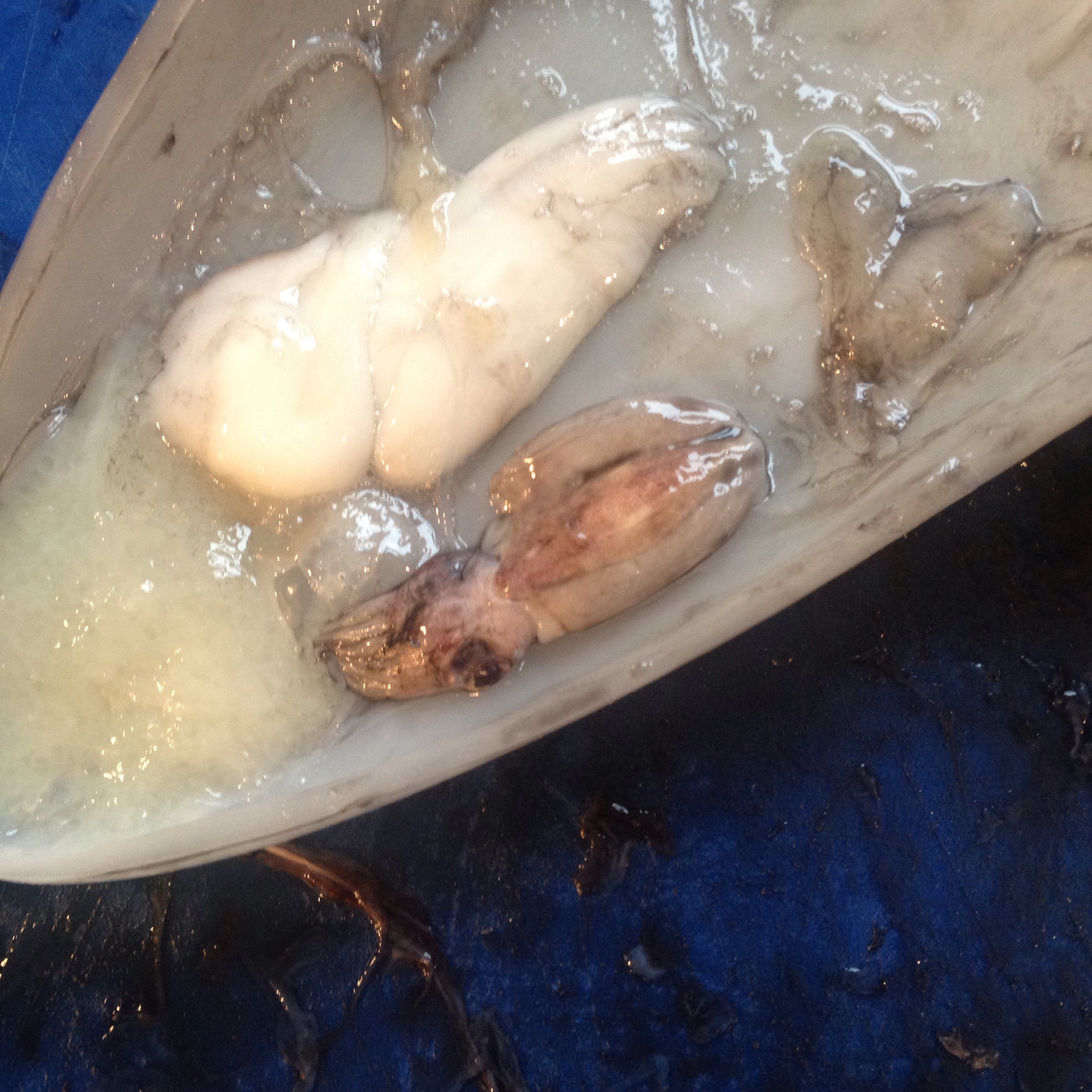
At the last count, I had fourteen pots, buckets, crocks and tubs of (mainly) vegetable matter, being gradually colonised and transformed by bacteria. A mash of green chillies, gathering flavour before their vinegar bath; a souring julienne of roots and stalks; pungently spiced cabbage bubbling under airlocks; a foul-looking bucket of squid trimmings and guts. On the more experimental side, there is a vat of sweet honey-water that may or may not attract enough wild yeast to turn into alcohol, and a jar of brined radicchio that probably won’t, now, reach a pleasant eatability. All these things and more require almost daily attention or at least awareness, to be alert to the first sign of mould or rot or, equally, deliciousness; you don’t want your pickle passing its peak before it even gets jarred.

While there is, I suppose, a certain fascination in watching all this happen, the main payoff comes when your ferments are ready – which won’t be for a while. These things take time, especially in cold weather. Luckily, winter is full of instant gratification too, if you look for it – crisp salads of fennel and blood orange and chicory and nuts, or warm ones of roasted brassica, lentils and cheese; steaming, boozy pots of mussels or clams, or spitting pans of squid. All wonderful things that barely need a recipe. Slice Florence fennel and segment the juiciest Sicilian oranges, and combine them with the aid of sweet vinegar and bitter oil, and you have one of the world’s perfect dishes. How is it John Lanchester has it? “A taste that exists in the mind of God”. I can’t remember what he, or rather his narrator, is talking about.

My dinner last night was Romanesque cauliflower, roasted in thick slices with black pudding, tossed with braised lentils, shredded confit chicken, red onion and lettuce, dressed with olio nuovo and some vinegar from a jar of jalapenos; easy for me, because I had all of those things cooked or ready to hand. From scratch, a bloody faff of a recipe that probably wouldn’t be worth it. Still, you get the idea. We need something to keep us occupied while our slow food takes its time. You probably remember (ha!) how my rabbit ragout (my slowest recipe, I think) leaves you with spare saddle fillets; here, finally, is what to do with them. You are WELCOME.

RABBIT PASTRAMI
You’ll need a smoker, or some kind of tray-rack-lid contraption that does the job.
How much this makes depends on how many rabbits you had in the first place. It is very adaptable.
Brined rabbit saddle fillets, rinsed and dried overnight in the fridge
A handful of coarsely ground black pepper (you’ll probably want to do this in a spice grinder, if possible; you could use bought cracked pepper, but it’s not as nice)
2 tbsp loose black tea
1 cinnamon stick
2 bay leaves
Take the fillets, which should be a little tacky after drying (this is called the ‘pellicle’, I don’t know why) and roll them in the pepper to coat. Shake them gently to remove the excess, and arrange on the rack of your smoker so they aren’t touching. If you don’t have extraction, open a window.
Put the tea and spices in the bottom of the smoker, drip tray (if there is one) on top of that, then the rack, and then the lid, or tinfoil, leaving a small gap. Place on a high heat until smoke starts to wisp out, then close the gap and smoke on a medium heat for ten minutes. Take off the heat and leave for another ten before taking the lid off.
The ‘pastrami’ can now be sliced thinly and served with, say, sweet-pickled cucumber and rye crispbreads, or sauerkraut and cheese, or whatever; if you make tiny bagels to put it in, please send me pictures.

Speak Softly

One of my favourite phrases in modern food writing is, appropriately, found in probably my favourite cookbook, Fergus Henderson’s Nose To Tail. In a recipe for a kind of stewed sauerkraut, he asks the cabbage be cut with a “good big knife” – an excellent three words, suggesting that the goodness of the knife is inextricable from its bigness; which, of course, it is. Sharpness he doesn’t feel the need to mention – that’s there in ‘good’. It’s easy to think of big knives as the protuding egos of (often male) chefs, or, more charitably, as something desirable in a professional but unnecessary in an amateur situation; this is true, perhaps, in a way – but only in a way.


The thing about a large knife is it doesn’t just let you do things faster, although it does do that – slicing an onion, to take the most obvious example. There are also things which a good big knife allows you to do much better. Slicing that cabbage, for example, especially if you have a particularly large white, or one of those flat wide ones meant for stuffing, slicing it good and thin, is very difficult without a knife at least eight or ten inches long, with a wide blade to keep your knuckles from hitting the board. Chopping herbs well and finely, in sufficient quantity to be useful as a flavourant rather than just a garnish, is something that can only be done with a large knife – or a mezzaluna, I suppose, but if you’re going to buy one of them you may as well just buy a knife.


You know all this, I’m sure. Everybody, or at least everybody with an interest in cooking, which, presumably, you do, knows this; but the point is that acquiring a knife and the skill to use it is not just a technical achievement – it allows you to cook different things, and to cook them differently. It broadens your mental palate (palette?). The whole wok-driven side of Chinese cuisine, as Bee Wilson persuasively argues in Consider The Fork, rests on the knife skills required to chop things into tiny, uniform pieces, using one of those gigantic cleavers; if you’ve ever seen Eat, Drink, Man, Woman, you’ll realise the control and strength required.


Or, I’ll repeat, herbs – you can’t use herbs as they should be used, as great fistfuls of bright, green freshness, without a good knife. Don’t use those ridiculous 30g packs from the supermarket, either. Get a large bunch of parsley from a greengrocer, a market stall, or your Local Ethnic Food Emporium, pick the leaves off, put the stalks aside for flavouring stock, sauce, soup, pulses, or pickles; get your good big knife, and make this.


GREEN SAUCE

1 large bunch of parsley, picked

4 cloves of garlic

a pinch of capers

8 cornichons or one gherkin

4 tinned anchovies, or 1 tbsp garum

a splash of red wine vinegar

extra virgin olive oil

sea salt and pepper

Finely chop the parsley. Some mashing is acceptable and even desirable, so this is a good recipe to practice chopping on. Go over and over the herb with your knife, until it is very fine. Put in a bowl. Finely chop the garlic, sprinkle over some salt, and then crush to a paste with the side of your blade; this is very satisfying.

Add the garlic and the capers to the bowl; chop the cornichons, fairly roughly if you like, and the anchovies, if you’re using them, and put everything in the bowl. The amount of oil you add depends on how saucy you want your sauce; I often keep it quite dry, capable of standing up by itself, for topping fried or grilled things. If you’re stirring it into soup or ragout, you might want it a bit sloppier. It’s your sauce.

Five New Things

I was going to do another dishes of the year post (it is Listmas, after all), but looking back at last year’s I realise that I haven’t eaten anything like as well. Apart from St John’s bone marrow, mullet at Lyle’s, smoked pork fillet at Morito, sausage and radicchio in Naples, snail-and-trotter-stuffed potato at the Poule D’Or, rabbit at the Walnut Tree, pig’s head and potato pie at St John, again (Bread and Wine, this time), the patty melt from Patty & Bun, cuttlefish at Taberna do Mercado, and perhaps a few other things I’ve forgotten, nothing really stands out. I just haven’t had the time for extravagant meals; I’ve been too busy working.


Luckily, all of this working means I’ve had plenty of time to experiment (mess around) with various new-to-me ingredients and techniques, many of which have found a permanent place in my repetoire. So, since it is the season, here are five things which have revolutionised the way I cook this year. None of them are new – quite the opposite really – and all are fairly simple. I call them techniques, but none are very technical. The point is flavour.


BRINING

Everyone who brines their meat is absolutely evangelical about it – and rightly so. The difference it makes is astounding. It’s only this year that I feel I’ve really got to grips with it – I used to brine EVERYTHING, quite heavily, but I’ve got more selective. Pork belly, for example, I don’t think wants it; brined pork just tastes of sausage (not necessarily a bad thing, but not always what you want), while brining pigeon does weird things to the flesh. Chicken, rabbit, tongue, anything you are going to smoke, most things you are going to poach. Most things, really. Following St Fergus, I use a pretty strong brine of 125g salt and 80g sugar per litre, plus spices as appropriate; I generally boil the dry stuff with half the water, then add the rest as ice when it’s ready, but that’s because I’m impatient.


FERMENTATION

Specifically, the fermentation of tomatoes. I’ve been pickling things for a while now, but this was a breakthrough. A recipe from Ukrainian chef Olia Hercules, it’s really simple; a weak brine (35g salt/ 35g sugar/ 1l water), a few cloves, peppercorns and juniper berries; a jarful of nice, underripe tomatoes; pour the one over the other, and leave for a couple of weeks. The tomatoes are great, but the resulting liquor is the secret weapon. I’ve cooked mussels in it, pickled other things in it, and used it as the base for a squidgut sauce. I now ferment almost all things.


SALT-BAKING

Salt has definitely been my most-used ingredient this year. For most things, but especially salt-baking, I use the coarse Cornish sea salt; Maldon’s is far, far too expensive. Salt-baking whole fish is something I’ve been aware of but never bothered with; when Stephen Harris tells you to do something, though, you sit up and listen. Like him, I’ve always found gurnard a challenge; obviously, it is cheap and good to eat, but I’ve often ended up chucking it into stews. Salt-baking it, though, gives you really moist, juicy and well-seasoned flesh. I serve it with a tomato-infused fish stock, and let everything sing.


RAISING

Not so much a new technique as a different point of view. After being obsessed with sourdough and all the obscure, manly practices which go with it, the Violet Bakery Cookbook reminded me that baking could be easy and fun. Claire Ptak is pragmatic. She doesn’t have the space, she says, for yeasted baking, so develops recipes, inspired by mid-century American cooking, using baking powder and sodas. Her cinnamon bun recipe is a thing of excellence and perfection.


EMULSION

You know how decent recipes always tell you to save the pasta water and add a bit to the sauce? Just do that. It’s magic.


Inappropriate Pun About A Tart


I don’t really do festive cooking. The feast itself is kept under the iron control of my mother, who adheres to a timetable developed over 40 or more Christmases, not to mention Eves and Boxing Days; I help with little jobs, the blanketing of pigs and the cross-hatching of sprouts, but the real meat of the matter, the planning, execution and seasoning, is all hers.


Professionally, I’ve been lucky, in recent years, to work in places that don’t really do festive cooking either; certainly not in a turkey-and-cranberry-and-mincemeat-and-stuffing-and-bread-sauce sort of a way. My first job was in a hotel which VERY MUCH did Christmas, with large work parties several times a day (turkey, smoked salmon & port everywhere). It was, I remember distinctly, hell.


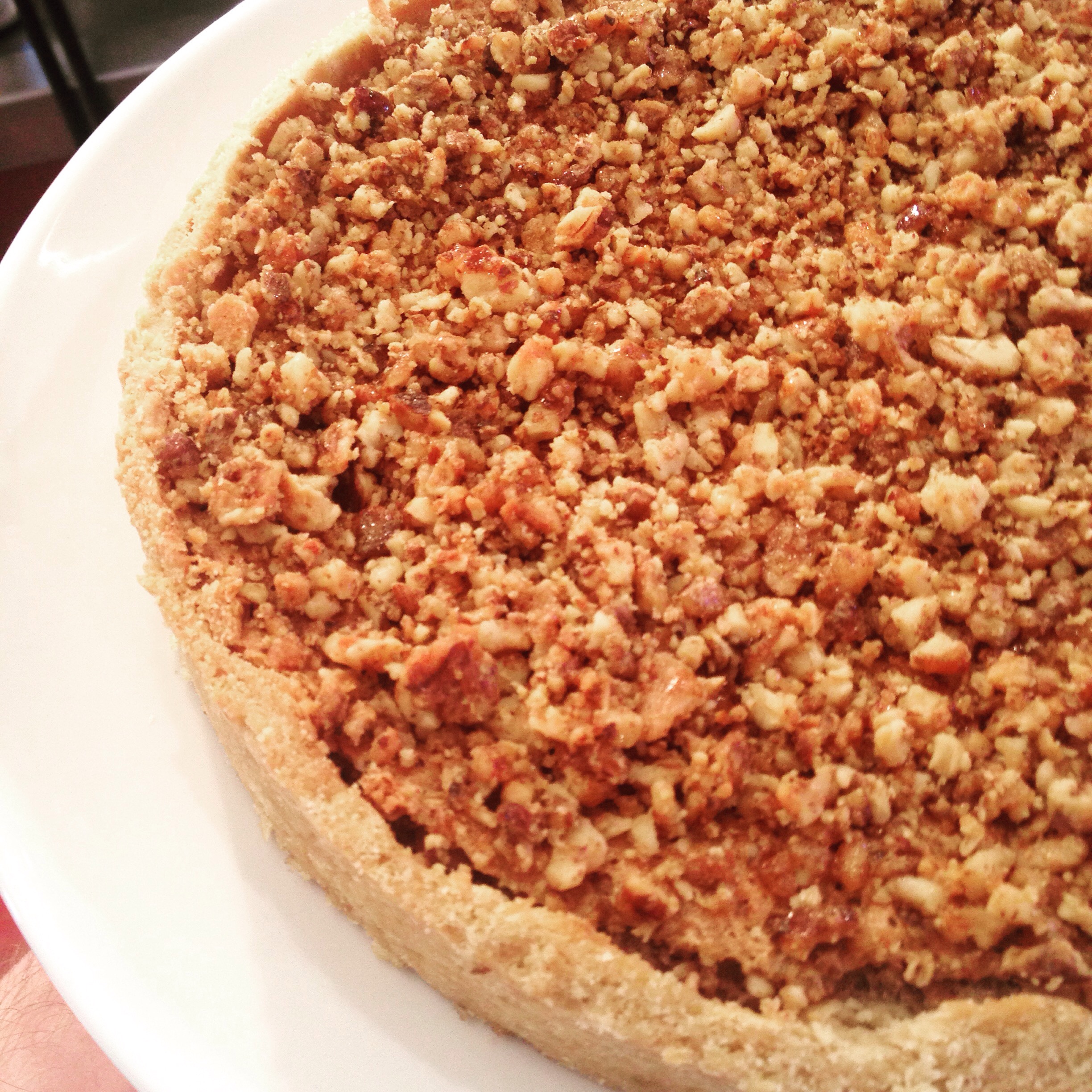
Still, it’s nice to give a nod to the season, in the form of nuts and dried fruits and spices. There’s bugger all else to bake with, for one thing, at least until the orange season really kicks in. Hence this tart, with flavours from somewhere between Turkey and Ukraine, and a texture and taste blending mincemeat, treacle, and bakewell – snap, squidge, crunch.


SOUR CHERRY AND WALNUT TART

Makes 1 tart.

PASTRY

250g plain flour

50g light muscovado sugar

125g cold, cubed butter

1 egg

pinch of salt

splash of milk

Preheat the oven to 200°C. Blitz, rub or cut the flour together with the sugar, butter and salt. When it looks like fine breadcrumbs, mix in the egg and a tiny splash of milk, then form into a ball and stick in the freezer while you make the filling.


FILLING

60g caster sugar

60 soft butter

1 egg

60g walnuts

1 tbsp plain flour

100g dried sour cherries

Grind the walnuts with the flour into a fine crumb. Cream the sugar with the butter until almost white and really fluffy. Beat in the egg and then fold in the walnut mix.

Roll the pastry out thinly to line a buttered and floured tart tin (you’ll have too much pastry, which is infinitely preferable to not enough). Trim off the excess, and spread in the filling. Sprinkle the cherries evenly over the top (they’ll gradually sink, which is fine), then bake for about an hour until the filling is set and the pastry is a nice brown. Meanwhile, make the topping.

TOPPING

80g walnuts

30g caster sugar

a pinch of salt

1/2 tsp caraway seeds

1/2 tsp ground cinnamon

knob of butter

Put the walnuts in a small frying pan with the sugar, salt and spices, and toss and heat gently until the sugar melts and darkens into a caramel. Melt in the butter, then tip the lot onto a piece of baking parchment. Leave to cool, then smash or roughly blitz.

When the tart’s hour is up, sprinkle the topping over it and put back in the oven for 10 minutes or so. Leave to mostly cool, then turn out of the tin and serve with fresh cream.


Al Dente

It’s that time of the year when everyone starts arguing about sprouts. In one corner, the unapologetic sprout-lovers, for whom the smell of ancient, boiled socks goes hand-in-hand with Christmas like peaches and cream; in the other, the genetically superior brassicaphobic, who cherish and guard their ability to taste that hint of queasy bitterness which lurks at the back of every cabbage. In the middle, calling for reason, are those who understand that said bitterness is only activated by the preparation which the French are pleased to call a la Anglais; the long demolition of vegetables. A well-raised sprout, on the other hand, cooked until it is cooked, is edible to all, and capable, as most things are, of deliciousness.

The cooking of things until they are cooked, sadly, is a dying art, having lost significant ground on both sides, to the aforementioned English vice as well as to the tyranny of al dente. The latter phrase, you are probably aware, is Italian for ‘to the tooth’ or ‘to the bite’, and refers to the raw snap they prize at the core of pasta; I don’t think an Italian cook would apply it to a green vegetable, which tend, in my limited experience of Southern Italy, to be cooked until they are cooked, dressed heavily in good, bitter oil, and left to sit at room temperature – an excellent preparation for any bean or brassica. No – I think the blame here can be set squarely on the French, or at least on a certain kind of quasi-French cooking, which prizes colour, texture and structure above things like taste. In a thousand hotel kitchens across Europe, chefs are blanching beans, broccoli and spinach until a fixed dark green, shocking them immediately in iced water, and then reheating to order in a little emulsion of water and butter or, if pressed for time, in a microwave. Somewhere in this process most of the actual, distinct taste of the vegetable is lost.

Worse, when applied to certain things – cabbages, mainly – the process renders them actively unpleasant to eat. Having lost the crunch of rawness but not fully cooked through, they become chewy and curiously resistant to the eating. I had some ‘braised’ red cabbage the other day which just wasn’t – half-cooked, it had lost all its own flavour without anything to replace it, and I found it, really, a chore. Either cook it or don’t cook it; don’t mess around in the middle. I like my steaks cooked medium rare, just warm and giving in the centre; I love steak tartare with a fierce, barbaric passion. I don’t want great slabs of charred, mostly uncooked muscle. If the meat is good enough to stand up to that, give it to me raw and I will tear at it. There is a current fashion for raw fish, often salted or pickled, which is then singed with a blowtorch. Apart from the obvious pleasure of playing with a blowtorch, I can’t see any merit in this. Either cook it until it is cooked, or leave it alone. And please, please stop serving lentils al dente.

Blackest Ever Black

I made a very good custard tart the other day. Sweet shortcrust, a layer of soaked and mashed dates, then eggs and cream, beaten with maple syrup instead of sugar, and spiced with cinnamon and black pepper; baked in a very low oven for an hour until just wobbling in the middle, it made a lovely dessert, vaguely festive without bowing to the tyranny of port and mincemeat which dominates this month.


Very nice of course, but not a particularly interesting recipe; in fact, I just gave it to you. Figure out the amounts for yourself – that’s what I did, and as I didn’t write them down, any more formal recipe would be a lie. Anyway, there are enough festive desserts knocking around the internet, and that’s not the only thing December is for. Traditionally, this would be a time of preservation, of careful stockpiling against the coming cold – specifically, for pig-killing. A fine traditional folkway, in which the whole village collaborates in turning a breathing animal into charcuterie. Unfortunately, I don’t have a pig.


What I do have is a lot of jars and a certain amount of free time, and so, when Rene Redzepi tweeted a recipe for squid garum, my interest was piqued. Garum, you may be aware, was the near-universal seasoning beloved of ancient Rome; made of the run-off from fermenting salted anchovies, it would have been very like a south-east Asian fish sauce, providing a similar whack of umami to all savoury dishes. Now, I’ve never been particularly fussed by fish sauce, but I love making things, especially things which involve fermentation AND entrails. So here we are.


I had to adapt Redzepi’s recipe to what I had to hand; he uses barley koji, which, basically, is steamed grain impregnated with bacteria. Used in the fermentation of miso and so forth, the idea (I assumed) is to colonise the sauce with good bacteria, and to give them something to feed on, as a prophylactic against the bad kind. I replaced it with a mixture of fermented tomato brine and flour, and I’m not dead yet. Any unpasteurised fermented brine SHOULD work, if I’m right. However, I make no claims for the edibility or otherwise of this sauce. As with any home-cured protein, you follow your nose and take your chances.


GARUM

500g squid or mackerel bits, including guts (& ink), head, and any trim

120g sea salt

100g flour

100g fermented tomato brine

400g water

Blitz the fish bits to a paste. If you don’t have a food processor, then good luck to you. Mix everything together and leave to ferment at 60°C for 5-10 weeks. (I’m currently trying a load at room temperature, to see if that works; I’ll get back to you). When ready, it should smell deeply savoury and not really fishy. Bottle and use as you would anchovies or, obviously, fish sauce. The terror of death gives it piquancy.

A Pie For The Ages

Who would remember Arnold Bennett today if not for the celebrated omelette? His books, now, are only read by those in search of the inspiration for his rich, voluptuous breakfast dish; foolish, since he had nothing to do with its creation. A similar situation prevails with Dame Nelly Melba, except that no-one eats her peaches either, while melba toast, it is popularly thought, is named for Melbourne, despite the clear resemblance the thin, curved slices bear to the Sydney Opera House.


We do not choose our posterity; I doubt poor old Arnold would be glad to know that he is remembered chiefly for a pungent mainstay of the middlebrow brunch menu – although it is perhaps preferable to being remembered chiefly for not being Alan. Prince Rainier Louis Henri Maxence Bertrand Grimaldi of Monaco, on the other hand, thoroughly deserves his monument, which takes the form of a pigeon as richly overstuffed as the prince’s name.


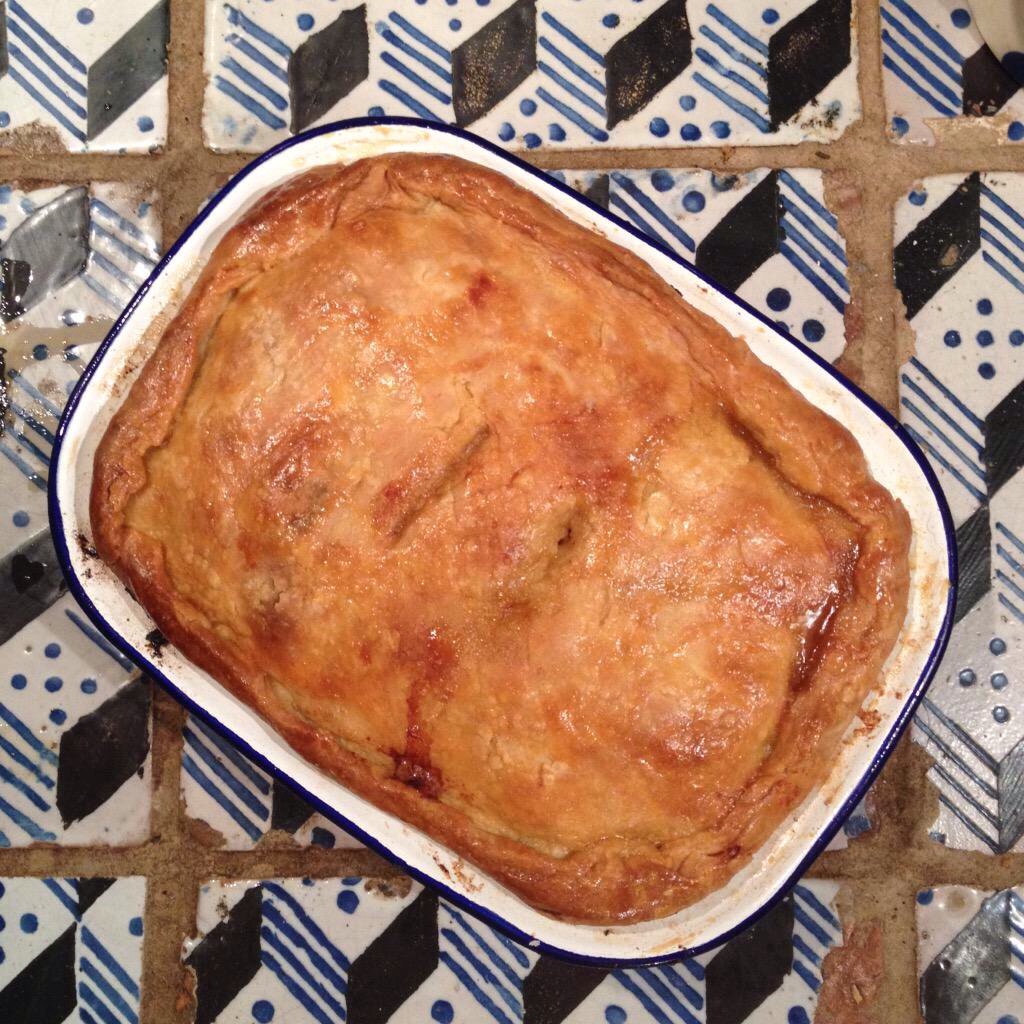
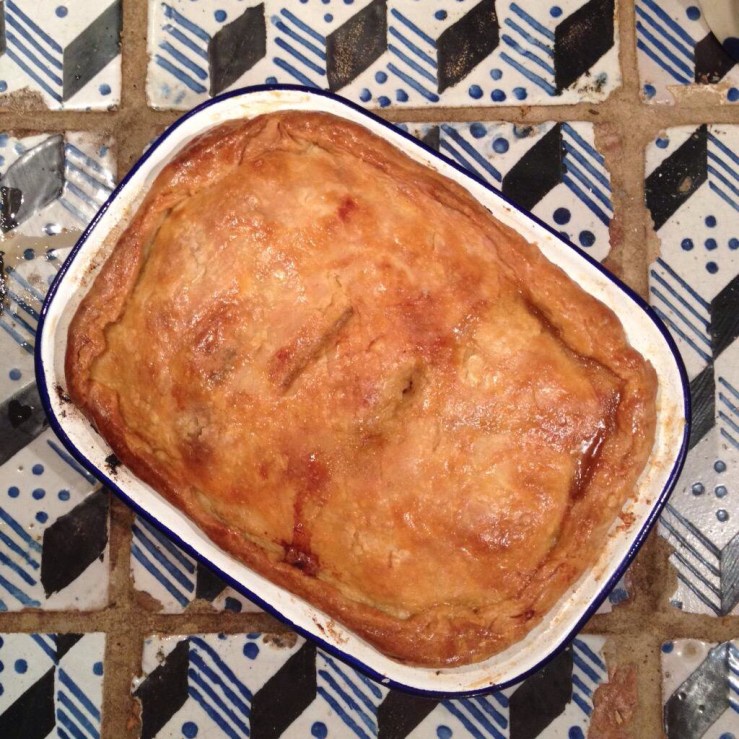
I took, of course, all this into account in the creation of a birthday dish for my brother – not that I think he will be remembered solely for this somewhat humble pie; who knows, though, what changes the inexorable march of time will wring? Perhaps, a hundred years from now, the tables of upmarket pubs and downmarket hotels alike will groan under the weight of Venison Pie James Eagle, named for that connoisseur of pastry products and local boozes.


VENISON PIE JAMES EAGLE

A pie for 4

FILLING

The alcohols mentioned form an important part of the rich history this pie carries with it, and should not be substituted under any circumstances; if you must, note that Whitstable Bay is a light, golden ale, and Brecon Botanicals a highly spiced, strong gin.

2 large onions, finely diced

2 carrots, finely diced

2 sticks of celery, finely diced

100g smoked bacon lardons

400g stewing venison

a shot of Brecon Botanicals gin

half a bottle of Whitstable Bay Organic Ale

125g black pudding, sliced

salt, pepper, oil


Set the vegetables and bacon to sweat in a stewpan or casserole with, of course, a splash of oil and a good pinch of salt. You are looking for near-total collapse.

Meanwhile, brown the venison in a very hot pan, a few pieces at a time, setting them aside as you go. Deglaze the pan with gin, and pour the juices over the meat.

When the vegetables look good, add the meat and juices to the pot, stir well, and pour over the beer. The meat should be just about covered – add more beer if not. Season freely but soberly, bring to a putter, and leave to cook for an hour or two or more – until the meat is totally giving.

Set aside to cool, fry the black pudding until crispy, then set that aside too, draining on kitchen paper if it’s a particularly greasy example.

PASTRY

220g plain flour

a pinch of salt

1 tsp ground black pepper

50g melted butter

1 large egg + 1 to glaze

50ml boiling water


Stir together flour, salt, pepper, butter and egg until thoroughly mixed, then, still mixing, add the water. Mix and then knead until you have a soft dough, pliable and pleasant to handle. Leave to rest for ten minutes or so, but don’t let it get cold.

Roll out two-thirds to fit your buttered pie dish, press this in, and add half the filling, then half the black pudding, etc. Roll out a lid, brush the edges of the base with egg, and stick the lid on. Roll and crimp the overhang according to your whim. Brush the top with egg, cut two slits for steam, and put into a hottish oven (220°C?) for about half an hour until a dark golden brown.

The traditional accompaniments are cabbage sprouts and claret.

The Fastest Potato

I’ve never actually read any of Marguerite Patten’s food writing or, until today, cooked even one of her recipes. It turns out, though, that I’ve eaten a lot of her food. A lot of recipes that I remember eating a lot as a child – particularly, in fact, the ones which I always thought were traditional, family recipes – come from Patten’s books. A lot of these were preserves – jams & chutneys, of course, but most notably the mighty family store of pickled shallots. Dad would (still does, in fact) bring back his wheelbarrowful of little alliums from the allotment, and sit in the garden peeling them; then they’d sit in vast brine tanks before their spiced, malt bath. Then, of course, the endless torment before you were allowed to open them. I remember one year popping a jar before they were ready and eating most of the contents; the stomach ache brought on by eating quite a large amount of raw onion was not pleasant, but the vinegar still tasted good.

I didn’t, unfortunately, have time to recreate these, but it felt appropriate to mark what would have been Patten’s 100th birthday with another of her recipes. This page in my Mum’s cookbook is apparently covered in ancient batter, so I assume I used to eat these a lot.

POTATO DROP SCONES

Wee potato pancakes, really. Feeds two or so. I give you the recipe in ounces, as my mother gave it to me.

2oz plain flour

1.5 tsp baking powder

pinch salt (a BIG pinch)

4oz very smooth mashed potato

1oz melted margarine (because it is no longer the 70s, I used butter)

1 egg

1/4 pint of milk

Sieve together the flour, baking powder and salt (does anyone really do this? I didn’t. Just put them in a bowl), then thoroughly mix in the potato. Beat in the butter, then the egg, then the milk.

Heat and oil a frying pan and drop (hence the name) in spoonfuls, flipping them when they start to bubble on top, then cooking until set. Keep them warm while you cook the rest, then eat. I had them with a pork chop and some cabbage, and they were lovely.

First Catch Your Brassica

Vegetables, let’s say, are pretty boring, differentiated mainly by colour and by location of growth – those that sit below the ground are started in cold water, those that flourish above are plunged into hot – and fully deserve their status as “side dish”. Well, they do if they’re treated like that. If all proteins were given the same attention – fish started in cold water, land animals in hot, birds steamed (?) – unbrined, unsauced, and barely seasoned, I imagine we’d have a fairly low opinion of them too. The flavours of most meat we eat come as much from the high heat they are subjected too – the Maillard reactions of sugars and protein – as from any inherent ‘meatiness’, while even plainly boiled animal parts are generally partly or fully cured before cooking, giving the gentle richness of tongue or hams.

Vegetables are much maligned, is the point. One way to rehabilitate them is simply to season the hell out of them, as the Italians do; I’ve talked about this before. That’s what we might call the ham approach. The other, then, is to try different ways of cooking – roast, grill, saute. While not every vegetable can take this kind of treatment, the list of ones that can is sometimes surprising – my favourite quick dinner at the moment is wedges of cabbage, dotted with garlic, anchovy, and black pudding, roasted until browned and topped with cheese – and certainly includes all the brassicas.

The cabbagey tendencies of cabbage and co are brought out only by long boiling, a process which, unless you’re cooking for the toothless (young or old) is totally unnecessary. Stir-fry your sprouts; gently braise savoy cabbages; even, if you must, make kale crisps. Certainly, roast your cauliflower. Everyone, it seems, is doing whole roast vegetables at the moment (I think Tom Kerridge started it), and while an entire cauli makes a nice centerpiece, they do better cooked in florets. Smaller pieces = more surface area = more flavour.

In this stupidly popular dish at the cafe (it’s never left the menu), pan-roast cauliflower is served, Turkishly, with hot spiced butter and cool herbed yoghurt – a pleasing array of sensations. This recipe appears in the forthcoming Suffolk Feast cookbook; consider this a teaser.

ROAST CAULIFLOWER, SAFFRON BUTTER, YOGHURT & PINENUTS

1 nice cauliflower
500g thick greek yoghurt
A small handful of mint and parsley, finely chopped
1 tbsp sumac
100g pine nuts
100ml white wine vinegar
1 tbsp caster sugar
Pinch saffron
100g cold butter, cubed
Olive oil
Herbs to garnish (we use more parsley, amaranth and purple basil – purple is good)
Salt and pepper
Make the two sauces first. Stir the herbs and sumac into the yoghurt with some seasoning and a good glug of oil. Set aside. For the saffron butter, first toast the pine nuts over a low heat until patchily brown and smelling faintly of popcorn, then tip into a bowl. Increase the heat and add the vinegar, saffron and sugar, letting it bubble down to a bright orange syrup.
Now, half on and half off the heat, whisk in the butter piece by piece – it’ll split if it gets too hot, if you add the butter too quickly, or if it’s left about for too long. When you have a nice glossy sauce, add the sauce to the pine nuts, and keep warm, next to the oven or over a pan of hot water.
Right. Preheat the oven to 200°C, separate the cauli into florets, and find a pan big enough to hold them in a single layer. Get it hot and add enough oil to coat the bottom. Now add the cauliflower and some salt, and for a moment pretend you are sautéing chicken. Leave the florets to brown on one side, then turn them carefully and let them brown again. Give the pan a shake and pop in the oven to finish cooking, which should only take 5 minutes or so. (You can do the whole operation on the hob if you don’t fancy turning the oven on for 5 minutes’ work – handy if you’re doing something else in it, though).
When the stalks yield to the point of a knife, they’re ready. Make a pool of herb yoghurt at the bottom of each plate, then toss the butter and some parsley through the cauliflower and pile it on top. Garnish with herbs and more sumac. It’s done.