Starch and Lard


  I think pasta was the first thing I really learned to cook properly, graduating from Super Noodles to the real stuff via those powdered-cheesy-sauce-in-a-packet ones (c’mon, they’re delicious) and taking notes along the way. (Disregarding the packet instructions, I would quickly reduce my barbecue beef sauce to a rich coating consistency, or mess around with butter:milk ratios – a foodie even then). I ate a LOT of pasta, perfecting the basics – the deep boil of the water, the cupped palmful of salt needed, the slick of oil or butter at the end – and still really like it for itself, rather than just a vehicle for sauce. A bowl of spaghetti with plenty of black pepper and cheese is one of my favourite meals.

Although I’m less inclined to eat huge expanses of starch these days, pasta is still my go-to quick dinner, my need-to-line-the-stomach-but-there’s-nothing-in-the-house fix, and as such I have a small but honed repertoire of very quick dressings for it. (I think pasta sauces should be either ridiculously long-winded – ragus of rabbit / ox cheek – or ready in the time it takes the pasta to cook. Anything in the middle isn’t really worth messing around with). The classic here is spaghetti with garlic and chilli, but I’m not going to sit here and give you a recipe for that; I’m also a big fan of the Sicilian sautéed brassica school. This, though, is my current favourite, born of the few oddities I had in an otherwise empty kitchen. There’s nothing worse than food writers talking about their ‘store cupboard’ dishes, assuming you have salted anchovies and the rinds of fine cheeses knocking about the place, so I won’t call it that. It was, though.

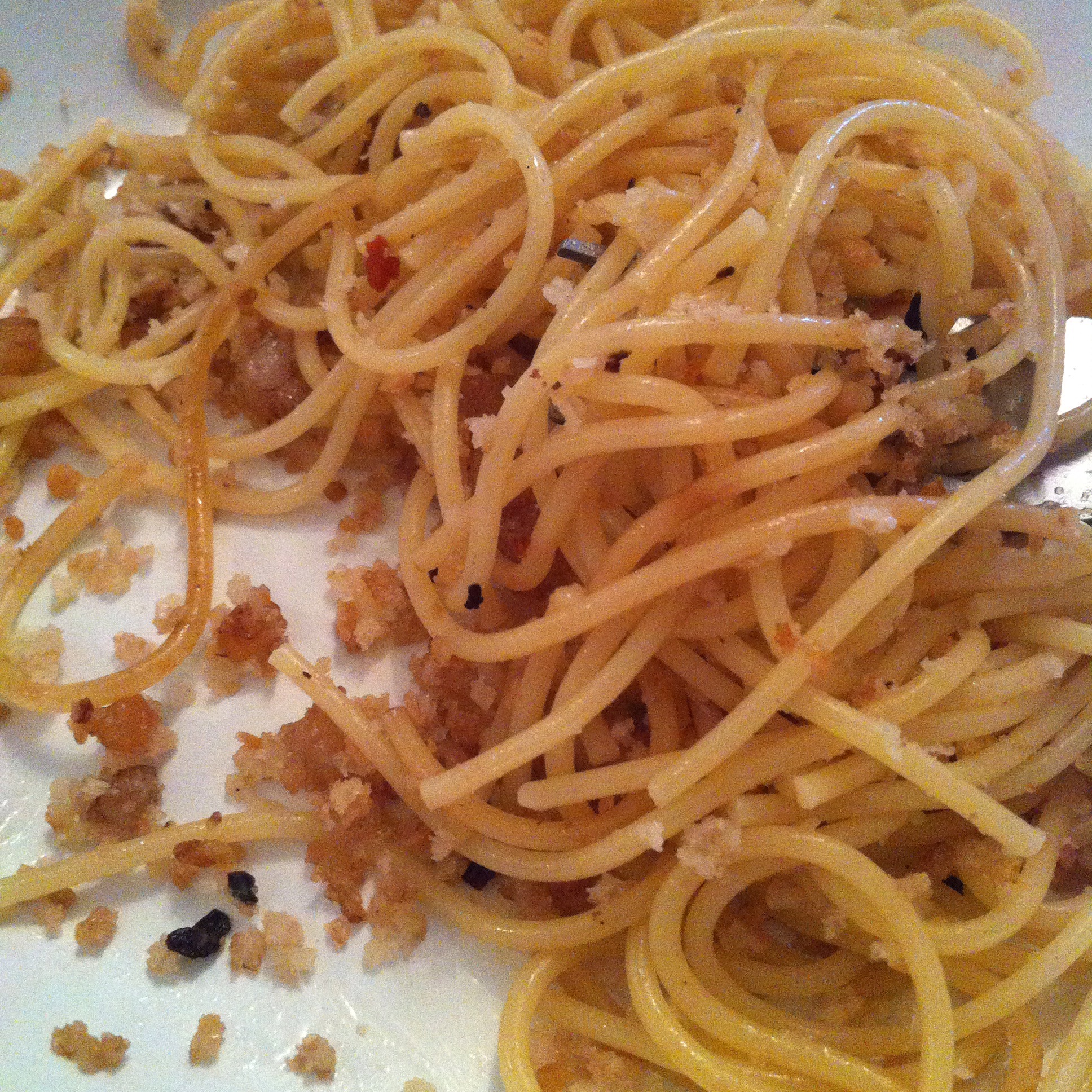
SPAGHETTI, PIG FAT, PICKLED GARLIC & BREADCRUMBS

For one

100g spaghetti

75g salted pork fat, diced (lardo or salo, depending on where you’re shopping)

2 cloves pickled garlic, sliced

a pinch of chilli flakes

a splash of balsamic vinegar

a handful of dried breadcrumbs (pangrattato, if you’re buying them)

salt and pepper

I assume you know the pasta drill; a deep pan of water, a good teaspoon of salt, a proper rolling boil. If I’m cooking spaghetti for one and therefore not in a huge pan, I like to break it in half before adding it to the water. You might feel that defeats the point of spaghetti, though.

When that’s on, put the pork fat in a cold frying pan and heat gently. When some of it has rendered out, add the garlic and chilli, and increase the heat, tossing it around to get colour on both the garlic and fat. When they’re nicely sautéed, add a splash of vinegar and let it reduce slightly. Put aside til the pasta’s done.

When it is, drain it, keeping a bit of the cooking water, and tip back into the pan with the fat and bits, and a spoonful of the reserved water. Give a good stir, and add the breadcrumbs, a load of pepper, and some salt if it needs it. Some parsley might be appropriate here too, but I didn’t have any.

Meat Free Week?

Strange though it might seem, I’m doing a series of blogs in support of Meat Free Week, starting today and running til Friday. Before you fling accusations of hypocrisy at me, let me explain myself a little. My blogs are for World Land Trust, who are involved in the project for reasons of conservation; specifically, the deforestation required globally to house and feed the hordes of livestock we eat.

The aim is to encourage people to think about where their food comes from and to eat less and better meat – wild or happily farmed, local or sustainable – and although some of my recipes will be fully vegetarian, others will look at different ways of consuming meat, as I always try to. I hope this is a thing that people can get on board with.

You can read my first guest blog here; more about the WLT’s involvement here; and have a read about MFW in general over here. I promise not to get too preachy.

Rabbit, Rabbit

photo Apologies for the rather long break (I’m sure you’ve all been on tenterhooks). I’ve just started a new job and have been rather busy testing dishes, writing menus, and pickling lots of things, so while I’ve had plenty of new recipes to share, I haven’t had the time to write anything about them. Even if I did, I’m not sure a lot of them would translate that well into the home-cooking format – like a lot of professional recipes they are broadly split between “take a lot of expensive and hard-to-source-ingredients and put them on a plate” and “subject cheap ingredients to a three-day process of dismemberment”. Still, I feel I’ve got to write about something, and putting things on a plate wouldn’t be very interesting, so dismemberment it is. This recipe uses one of my very favourite meats, and is one I’ve been working on – I don’t like to say refining, but certainly improving – for the last few years. Despite the increasing fashionability of game, rabbit is still pretty cheap to buy, and is a plentiful and guilt-free meat, the things being a pest in most of the country. Like most wild meat, though, it does need careful cooking, and can be a stringy and unpleasant eating experience if handled badly. This recipe is designed to minimise that possibility. People seem to treat the cooking of game as if it’s some great mystery, requiring an almost magical touch in the kitchen; basically, though, the meat is both hard-working – think how much a rabbit runs in its short life – and lean, and requires a healthy dose of moisture and fat to help it along. In this, as in so much, pigs are your friend. So. This is a lengthy process, but none of it is particularly hands-on, and is, I think, worth it. (I would say that though). To shorten things a little I’ve assumed that you’ll get the rabbit jointed, although as this is a satisfying procedure in its own right, I do suggest you give it a go sometime.

RABBIT RAGOUT

Happily serves four.

DAY ONE

All this can be done some time in advance.

TROTTER JELLY

3 pig feet (you’re not using the flesh for this, so don’t worry about shaving them)

2 onions

2 sticks of celery

2 fat carrots 2 leeks

1 head of garlic

A few cloves, peppercorns & juniper berries

Put the feet in a large pan, cover with water, and bring to a boil. Blanch for about 15 minutes, to drive off some of the scum. I’ve skipped this step before and ended up with a pan of sickly green, so please do it. Chop the veg into chunks, washing the leeks, and halve the garlic along its tummy. Drain the feet, rinse off any clinging scum, then put all in the pan and cover with fresh water. Bring to a bright simmer, and leave there for at least three hours, maybe more, until the trotters have completely collapsed, with bones poking all over the place. Drain the stock into jars or tubs, and discard the solids somewhere that won’t attract rats. Leave to cool, then refrigerate.

BRINE

300g fine sea salt (not table salt; it’s got stuff added to it)

200g granulated sugar

2 cloves of garlic, lightly squashed

A few cloves, juniper berries and peppercorns

Put everything in a pan, cover with two litres of water, and heat gently, stirring until the sugar dissolves. Turn up the heat and boil for a couple of minutes. Leave to cool, then refrigerate this too.

DAY TWO 2 wild rabbits, jointed

The brine

Put the rabbits in the brine, or the brine on the rabbit. Weigh down with a plate or something, and put in the fridge.

DAY THREE RABBIT Brined rabbit (you don’t need the saddles for this; they are much more tender and quick to cook than the legs, so save them for something else)

1 onion

1 fat carrot

1 stick of celery

1 leek

trotter jelly

chicken stock (if you have some)

Again, chunk the veg, and use them to make a rabbit bed in a suitable pan. Drain the rabbit, and rinse under running water for a good few minutes, then arrange the joints on their bed. Add enough trotter jelly to cover the rabbit once melted; it might need a top-up with stock or water. Cover and braise gently for a couple of hours, until the meat starts to fall off the bone.

SAUCE

1 large onion, finely diced

1 carrot, finely diced

1 stick of celery, finely diced

1 lemon, zest only

2 sprigs of thyme, stripped

2 tblspn tomato puree 100ml full-fat milk

50ml white balsamic or other nice vinegar

Extra virgin olive oil

Sweat the vegetables in a good slosh of oil until very soft, then stir in the zest and thyme leaves and cook for a minute until fragrant. Add the puree, increase the heat, and fry for a minute or two. Turn down again, add the milk, and let it bubble away to nothing, then do the same with the vinegar.

TO FINISH

rabbit sauce

a handful of chopped parsley Shred the rabbit meat of the bones and add to the sauce, then strain in enough of the braising liquid to just cover. Simmer until everyone seems happy together, then serve with something bright and green, and polenta or pasta.

Whisky On A Sunday

This was dessert for my Burns Night supper, and I originally intended to post it before then so you could enjoy it too – it made a fine, boozy end to a fine boozy meal. Apologies for that, then; but you shouldn’t need such an excuse to eat this. Winter is made for such small indulgences, and this is definitely a winter icecream, perfect for a warm house and a slightly over-full stomach. I prefer my summer ices a little less alcoholic.


A good, rich icecream made from scratch is one of the finest of simple luxuries, and – as with most things – is immeasurably improved by two fingers of whisky. Leave out the extras, though, and you have a very lovely basic recipe that is ripe for experimentation. If you make the custard carefully, you shouldn’t even need an icecream maker – the old whisk-and-freeze will do well, although it does take significantly longer. A word of warning – you might think ‘the more booze the better’, but too much and your mixture will not freeze. A double per pint is about the sensible limit, as in life.


WHISKY ICECREAM WITH SALT OAT PRALINE

Makes about 800ml

300ml whole milk

4 large egg yolks

130g caster sugar

300ml double cream

50g jumbo oats

A pinch of Maldon salt

50ml single malt (I used Macallan 10)


Gently warm the milk and cream to just below boiling. Meanwhile, beat the yolks with 100g of the sugar until thick and very pale. This is perhaps the most important part of the whole process – use an electric whisk, or you’ll get bored too quickly. When you’re done, the mixture should have doubled or even tripled in volume, and will be the kind of pastel yellow that gets called something like ‘chantrelle’ on colour charts. If in doubt, whisk a bit more. When you’re happy, whisk in the warm dairy.


Scrape the mix into a heavy-bottomed saucepan and heat very gently, stirring constantly with a wooden spoon. (A lot of recipes recommend a bain-marie for custard, but it takes forever. Just be careful). As soon as it thickens, take off the heat and strain into a clean bowl. If you can be bothered, place in a sink of cold water or ice and stir until it cools down. You don’t want scrambled eggs, although a certain amount of curdling can be strained out. Leave to cool, and preferably refrigerate overnight.


For the praline, toast the oats in a dry pan until they’ve darkened a shade (you could get that colour chart out again here), then add the remaining 30g of sugar and a pinch of salt. Stir and toss until nicely treacle-toffeeish, then pour onto a sheet of greaseproof. When cold, smash up.


Ok. Either churn the custard in an icecream-maker, adding the whisky and praline when it’s frozen, OR pour it into a large tub and freeze, uncovered, for an hour. Take out, whisk the edges into the middle, and freeze again; repeat until nearly done, then stir in booze and oats. Either way, a spell in the freezer overnight will finish it off nicely. Some shortbread and the rest of the Macallan would do very well here.


Whisky & Soda

IMG_5569


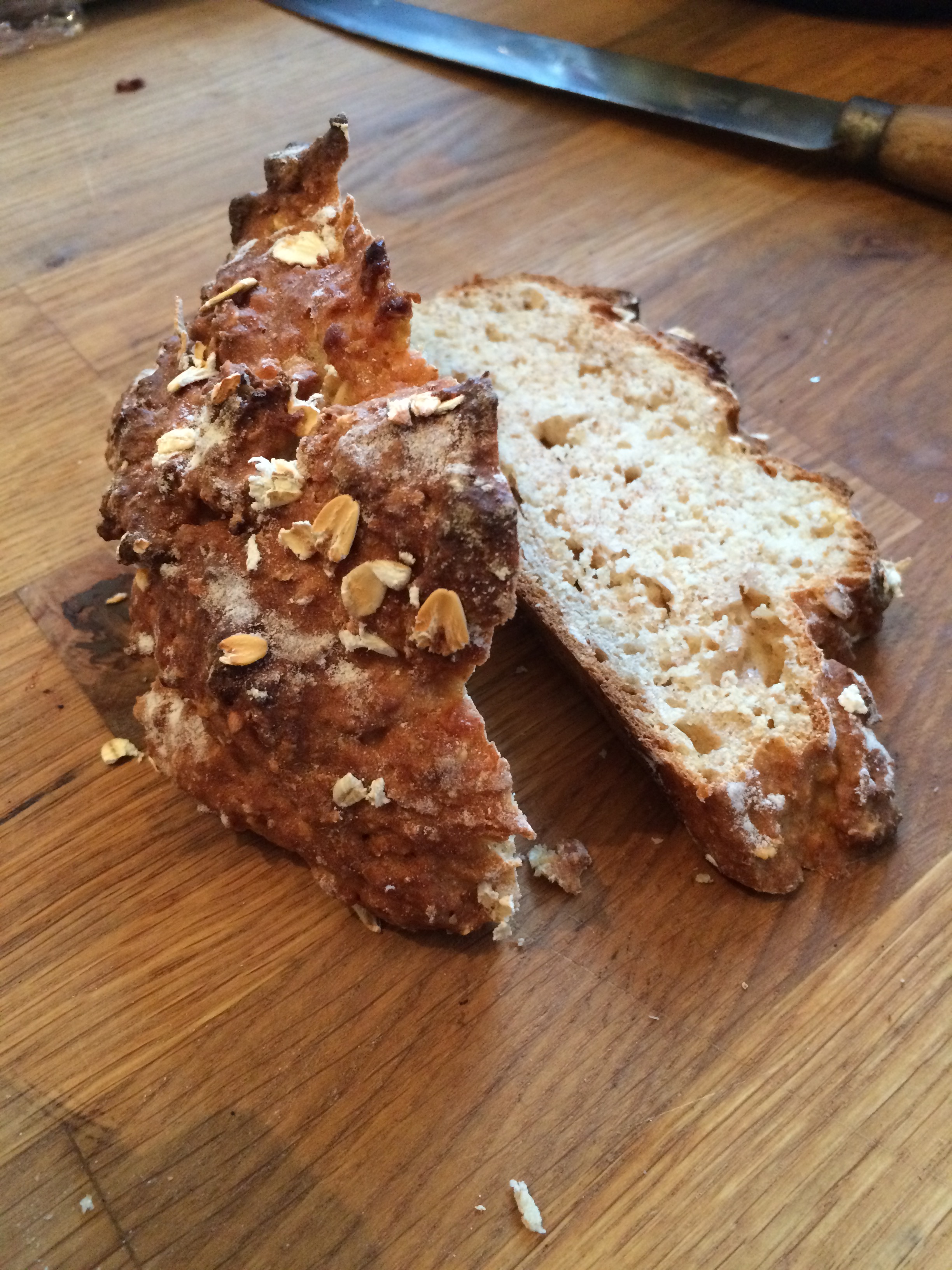
Soda bread is great. Not relying on organic, temperamental yeast, it is incredibly quick and easy to make, and forgiving of mishandling. Leavened with bicarbonate of soda, it can also take much more in the way of flavouring than regular breads – yeast can be killed or severely retarded by salt, sugars and fats, which can all be thrown merrily into soda bread. It perhaps doesn’t last as long as a well-nurtured sourdough, but the day-old loaf makes fantastic toast – and anyway, you can just make another one, as it doesn’t take two days to prove. The whole process should take little more than an hour.

I’m making this to go with my Burns Night supper – more Irish than Scottish perhaps, but I’m working on a whisky butter to go with it (although I might just add a tot to the dough). Anyway, the flavours – sweet and salty, rounded, nutty and wholemeal – go well with anything cured or meaty or rich. Ideal for dunking in soups and stews, especially when topped with a snicket of cheese.

SODA BREAD

Makes one small loaf.

140g strong wholemeal flour

140g strong white flour

20g jumbo oats, plus a few extra for sprinkling

1 and a half tsps salt (or a little less if you’re going to eat it with Marmite)

20g/1tbspn golden syrup

2 tsp baking powder

125ml water

125g yoghurt

20ml milk (or whisky, maybe)

Heat the oven to Gas 6/200C/400F. Yes, preheat it before you’ve started making the dough; that’s how quick soda bread is. Mix all the ingredients together in a bowl, and leave to rest for five minutes, during which time it will absorb a little more liquid – although this is still a very wet dough.

Form into a rough ball, and flump this onto a floured baking tray. Sprinkle with oats and a little flour, then cut a deep cross in the loaf (like, halfway through deep). Rest for another ten minutes, then bake for 30-35 minutes -like most bread, it’s done when it’s good and brown and sounds hollow when you tap it on the bottom.

Leave to cool most of the way before you eat, or it’ll be a bit gummy. Slather with butter, whatever else you do with it.

Great Chieftain o the Puddin’-Race!

I’m preparing for Burns Night, the real foodie winter festival. It’s not that I don’t love Christmas (I’m deeply suspicious of anyone that doesn’t), it’s just there’re so many distractions – presents, decorations, family, carols – that it’s hard, sometimes, to just get stuck in. For Burns Night, on the other hand, there is just enough ceremony to provide an excuse for the meal, and no more – which is as it should be. Furthermore, as we’re not subjected to haggis sandwiches and three-courses-for-£25-office-Burns-Night-meals for a month and a half beforehand and are therefore not bored sick of the whole affair, no one has yet seen fit to mess around with the meal. Instead, we are bound by iron, delicious, tradition – and the fact that it involves offal and whisky makes it all the better.

Of course, such a limited menu gives you little scope for showing off – so what do you do? You make your own haggis. I should warn you in advance that it is quite an undertaking, at least in terms of sourcing the ingredients; Fergus Henderson, whose recipe I adapted, seems to assume you won’t even try to make it, as he neglects to mention how hard it is to get a sheep’s pluck. I asked a couple of butchers, and scoured the internet, with no luck, but reasoning that the lungs probably don’t taste of much, I went with what I could get. Accordingly, this recipe assumes you will use sausage skins rather than one whole stomach; a less impressive spectacle, perhaps, but still very satisfying to make.

HAGGIS SAUSAGES

Enough for 8.
Large branches of Tesco are good for lamb offal if your butcher can’t oblige; places like Lakeland normally stock sausage skins. The oatmeal might be hardest to track down – you don’t want rolled, porridge or jumbo oats, which are steamed. Try health food shops.

3 lamb hearts
400g lamb liver
Bay leaves
Peppercorns
1 carrot, roughly chopped
Half an onion
A leek, roughly chopped
2 large onions, finely chopped
A little lard or butter
100g coarse oatmeal, toasted in a dry pan
100g dried breadcrumbs (buy panko or pangrattato, or make your own)
200g beef suet
4 tsp coarse ground pepper
2 tsp ground allspice
A pack of sausage skins or similar

Rinse the offal, then place in a large pan with the whole spices and stock veg. Cover with cold water and a big pinch of salt, bring to the boil, then simmer for two hours, skimming off the scum (there will be a lot) and fishing out the liver half way through. Meanwhile, sweat the chopped onion in lard or butter until very soft and sweet.

When the lights are cooked and cooled (save 500ml of the stock), dice roughly then coarsely blitz in a food processor, using the pulse button – you don’t want a smooth paste. Tip the result into a large bowl, then add the cooked onions, the reserved stock, and the rest of the ingredients (apart from the sausage skins, obviously). Mix thoroughly with your hands, and salt to your liking.

When happy, stuff or pipe into your skins or whatever; I used a sausage gun designed for the purpose, but a piping bag, bought or improvised, would do. If you can’t be bothered with any of that, just bake it in a flat tray like Paxo stuffing; it won’t be as fun, but will still be delicious. Leave your sausages in the fridge overnight to firm up.

When you’re ready to eat, heat the oven to gas mark 5/190C/375F. Put the haggises in a deep, oven-proof frying pan, and just cover with water. Bring to a boil on the hob, let them bubble until the water’s half gone, then stick in the oven to brown up and finish cooking – another 15 minutes or so.
Serve with neeps and tatties , a wee dram (mandatory) and perhaps some greens and mustard. Get someone to recite ‘Address to a Haggis’ in their silliest Scots, and plunge your knives in at the third stanza. Enjoy!

The Magic Pudding

photo(1)


Sometimes it’s nice just to follow a recipe. I own a LOT of cookbooks and eagerly await new ones, although I rarely follow them directly. There are a few exceptions, of course; technical procedures like baking or pickling, or dishes from cuisines that are entirely outside my understanding. In general, though, I (and I imagine a lot of people) use cookbooks chiefly for inspiration, the more so the more complicated the book is. I have never, for example, followed an Ottolenghi recipe through from start to finish; the number of ingredients alone is enough to put me off, even though I’d happily use that many myself when improvising. Fergus Henderson’s books are a joy to cook from, but the sheer effort involved can often be dispiriting – if it doesn’t need ordering in advance from a butcher, it probably needs brining for 5 days or (the most extreme, if tongue-in-cheek, example) cooking on driftwood in the Hebrides.


Give me an Elizabeth David or a Claudia Roden, though, and I’d happily cook every dish. You look at the short ingredient list and think “How could that be nice?” – but it always, always, is. They are vague where they should be vague, and precise when they need to be, forgiving of substitutions and geographical issues with sourcing ingredients. Although they have both since been coffee-tabled up with hardbacks and photos, in their original editions they are perfect to work from, small enough not to take up half my work surface, cheap enough that I don’t worry about getting wine all over the pages… And with no varnished, styled images to compare the end product to, I’m generally happier with the result.


Another fine food writer who seems to have resisted the coffee-table trend is Elisabeth Luard. Her European Peasant Cookery has the authoritative and pleasingly wordy air of a well-written reference book, a Brewer’s or similar; you can dip in and out whether cooking or not, and find solid, time-tested iterations of traditional recipes free from authorial meddling. If you want to know how to make, say, a pork pie, without Tom Kerridge or whoever faffing about with it, this is the place to go. So, I had some ox kidney, a steak in the freezer, and half a pack of suet in the cupboard; where else to look?


STEAK AND KIDNEY PUDDING

A pudding for two. You’ll need a little pudding dish.

The only deviation this involves from Luard’s recipe is in halving the quantities, and in the manner of arranging the meat; she slices the steak into little fillets and wrapping these around the kidneys, which seemed like a waste of time.

PASTRY

125g self-raising flour

1 tsp salt

80g shredded suet

up to 100ml of cold water

Sift the flour and salt into a bowl, then stir in the suet. Gradually mix in the water until you have a nice smooth dough. Roll out two-thirds to line your buttered pudding basin, roll out a lid, then get on with the filling.

FILLING

250g stewing steak (I used 1 flat iron steak, which was ideal), cubed

125g ox kidney, trimmed, cubed, and soaked in water and a little vinegar

about 6 button mushrooms, sliced

half an onion, diced

1 tbspn chopped parsley

50ml red wine

salt and pepper

Put a pan of water on to boil, big enough to house the pudding. Mix everything except the wine with a generous amount of seasoning, then pack into the pudding case (I know it seems weird to put in a raw stew mix, but it cooks beautifully in its pastry home). Pour the wine in, then dampen the edges of the pastry, cover with your lid, trim and crimp. Make a slit for steam, and cover with a disc of greaseproof and some foil, with enough give in it to let the pastry rise.

Place a folded tea towel into the boiling water, to protect the pudding from direct heat, then place the pud carefully on top. The water should come two-thirds of the way up the basin, so adjust as necessary. Cover the pan and boil for three hours, making sure it doesn’t go dry. When done, take it out and let it settle for a few minutes before turning out. Serve with greens and mustard.

Detox, Retox

IMG_2587


I know a lot of my recipes are rather time-consuming, long, involved processes that can stretch over a few days, and I do find this style of cooking very satisfying – there is something quite exciting about watching the gradual formation of carbon dioxide in a sourdough, or the slow maceration of garlic in vinegar. There is a time and a place for such procedures, however, and a hungover New Year’s Day is not it.

It baffles me why people decide to start diets on one of the most wretched days of the year. Kale granola is all very well for your long-term health prospects, but is no use at all in wrestling a hangover to the ground. You need filth, fat and protein and carbs, and most importantly, you need them quickly. Given time to sink in, the hangover will easily get the better of you – get the jump on it, though, and you’ll soon see it off. This is a brunch menu that can be prepared quickly, easily, and with your eyes half-closed.

BRUNCH

For two large hangovers

STAGE 1

2l sparkling water (the rising bubbles help remove the hideous taste from your mouth)

a large bottle of tomato juice (I used Big Tom, which is spiced and seasoned; if unavailable, go for something thick, and add salt, pepper, vinegar, and Tabasco)

1 pot of espresso

Full-fat milk

two pieces of toast

Pour the tomato juice into glasses, and the coffee into cups, topping up the latter with some milk (black coffee=heartburn city). The water should be drunk straight from the bottle. Consume in alternating gulps until all are gone, nibbling at the toast in a desultory fashion. This is your detox, so don’t enjoy it too much.

STAGE 2

4 slices of bread

2 large eggs

a small jar of pate, preferably pork liver

6 cloves pickled garlic, sliced

butter

salt, pepper, chilli flakes

Fry the eggs in butter, sprinkling with seasoning and chilli. Toast the bread. Spread with butter, and then two slices with pate, sprinkling over the garlic. Construct two sandwiches, and eat greedily.

STAGE 3

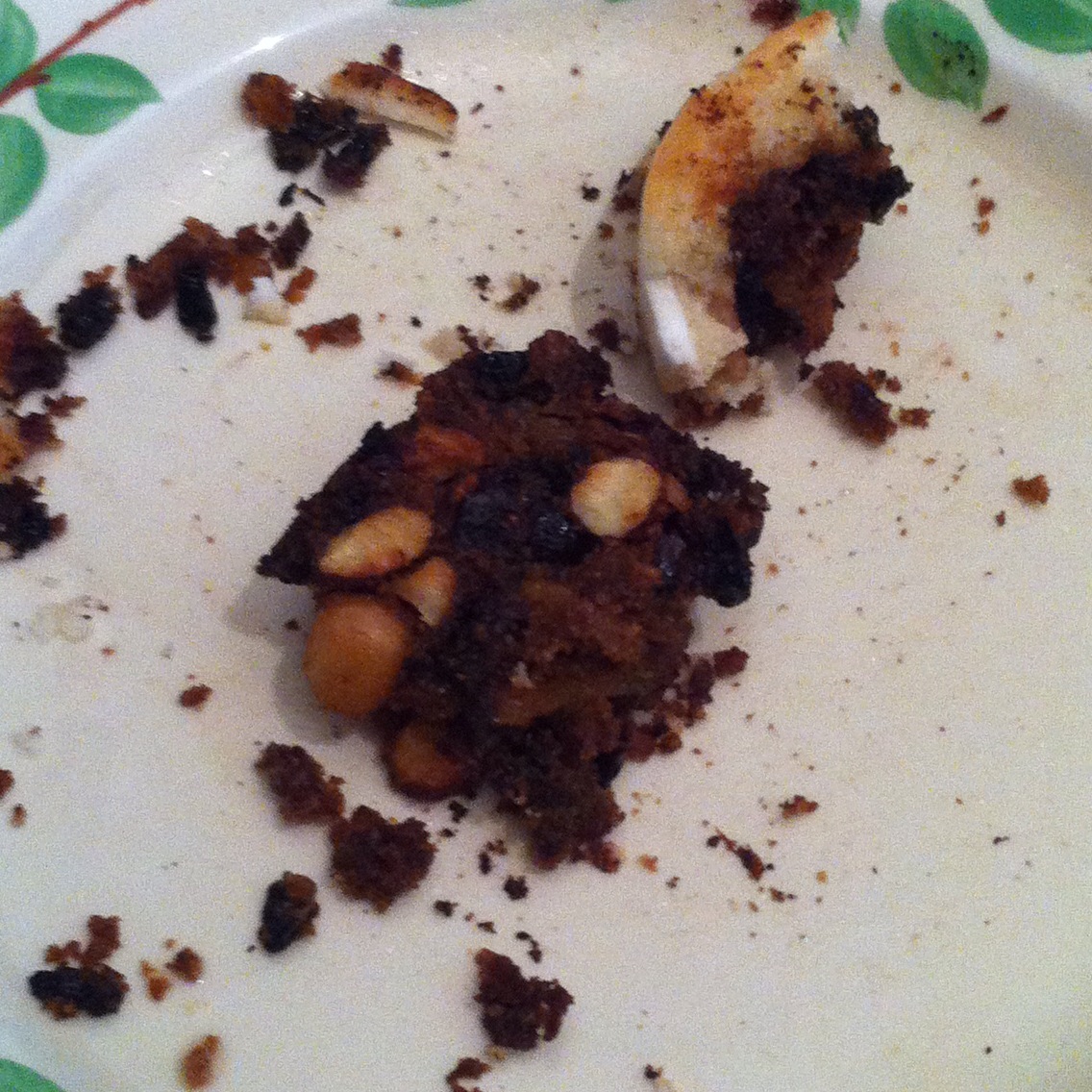
2 slices of Christmas cake

the pan you cooked the eggs in, with leftover butter

Maldon’s salt

Fry the cake very gently on each side, sprinkling over a little salt. The marzipan and nuts should be caramelised and golden brown.

Goodbye hangover; hello a new and better you.
Happy New Year!

Dishes of the Year

650


It’s that time of the year (Listmas? Ugh), when we gorge ourselves on the opinions of others, hope that we can make up for a year of apathy by digesting the entire cultural calendar in a bullet-pointed frenzy. With nothing much else to do (I’m not going to blog my Christmas dinner, am I?) I thought I’d wade into the fray. In chronological rather than ranking order, these are the best individual dishes I have eaten this year. I might have had better meals (that cheap, boozy fish dinner in Barcelona) or sampled better ingredients (salmon pastirma, perhaps), but these are the finest considered, composed plates of food I have sampled. For fairness and variety, I’ve only picked one dish from any meal or holiday – I could have chosen six from the Sportsman, for example – while for reasons of not being an arse, I have excluded anything cooked by myself.

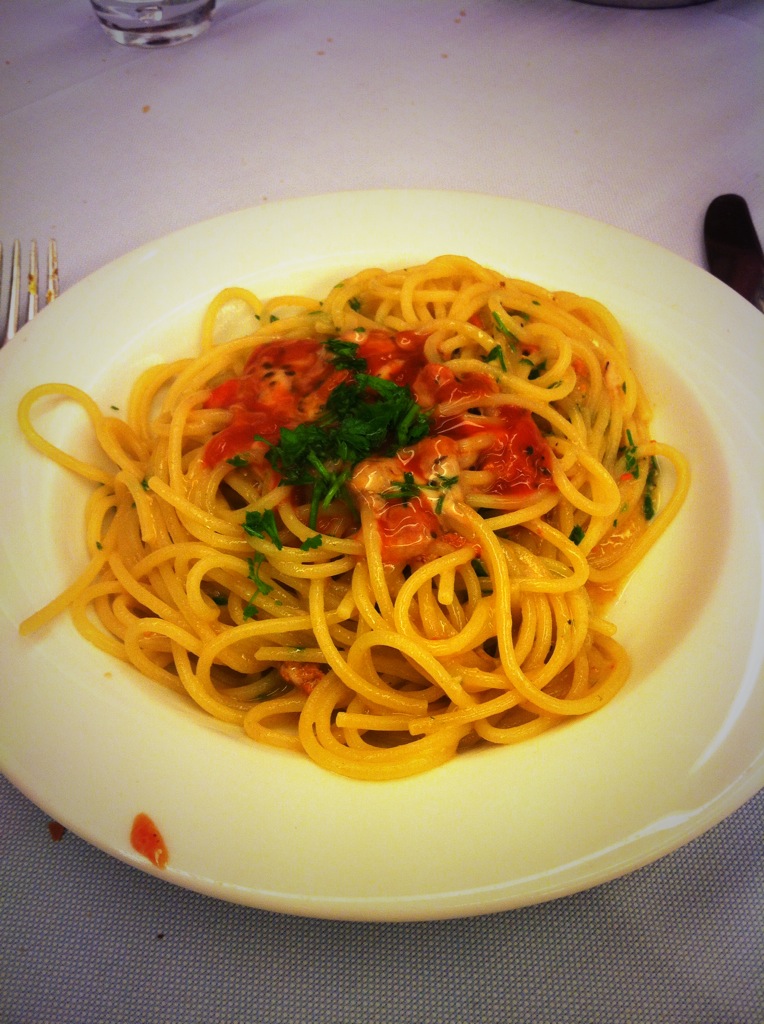
SPAGHETTI WITH SEA URCHIN
Piccolo Napoli, Palermo, 28/2
Just a triumph of simplicity, which I wrote about at the time. Spaghetti, fresh sea urchin gently cooking in the heat of the pasta, parsley (chilli?) and oil. Outrageously tasty, supremely redolent of salt and sea, it made me want to eat urchin all the time.

774


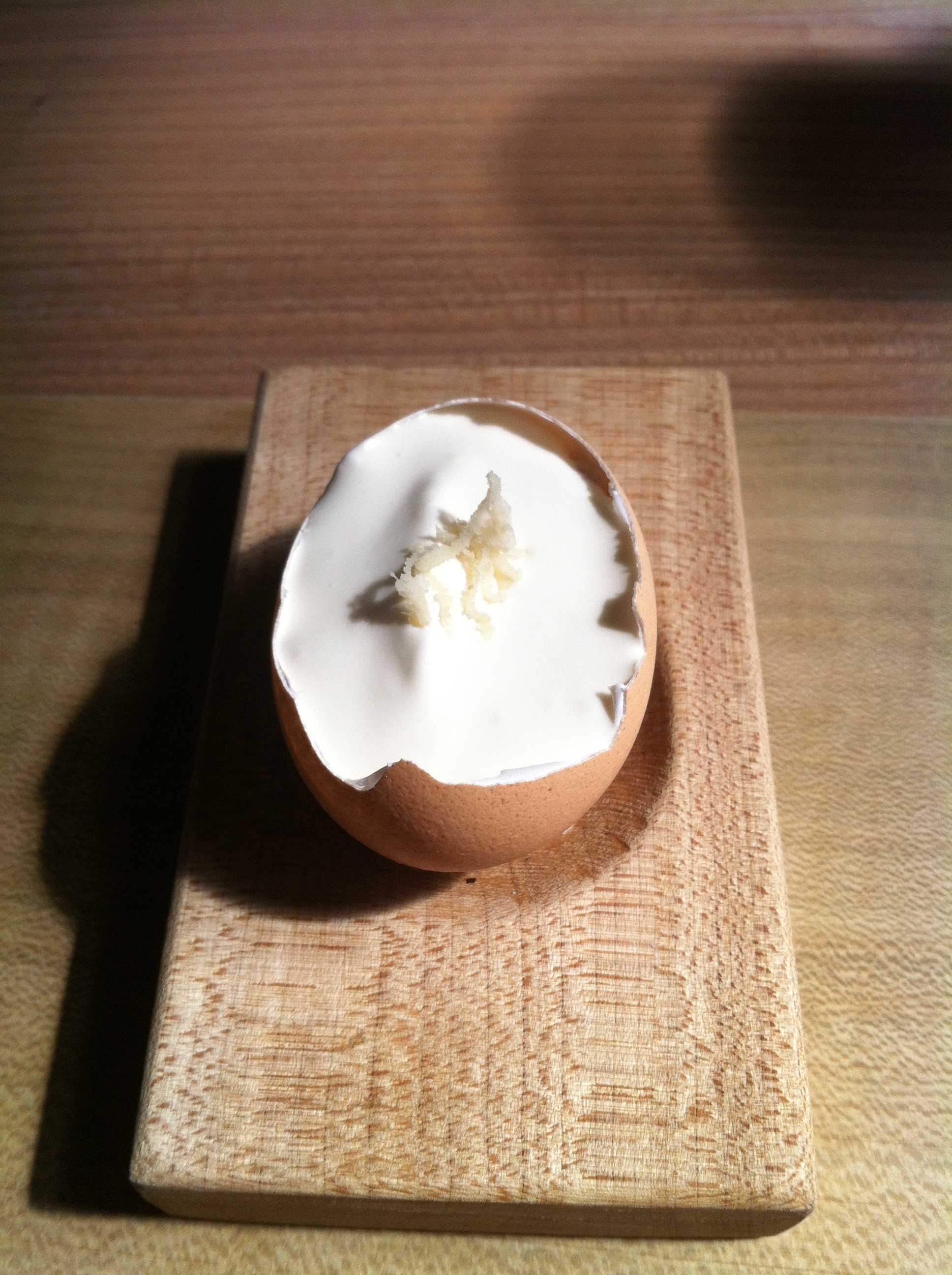
EEL AND EGG
The Sportsman, Seasalter, 16/4
The most impressive part of a very impressive meal, the full tasting menu at this Michelin-starred seaside pub. A warm poached egg yolk, a cool whipped eel cream, hiding little chunks of smoked eel and a violently fresh parsley sauce, all housed in an eggshell. Technically magnificent, beautifully flavoursome.

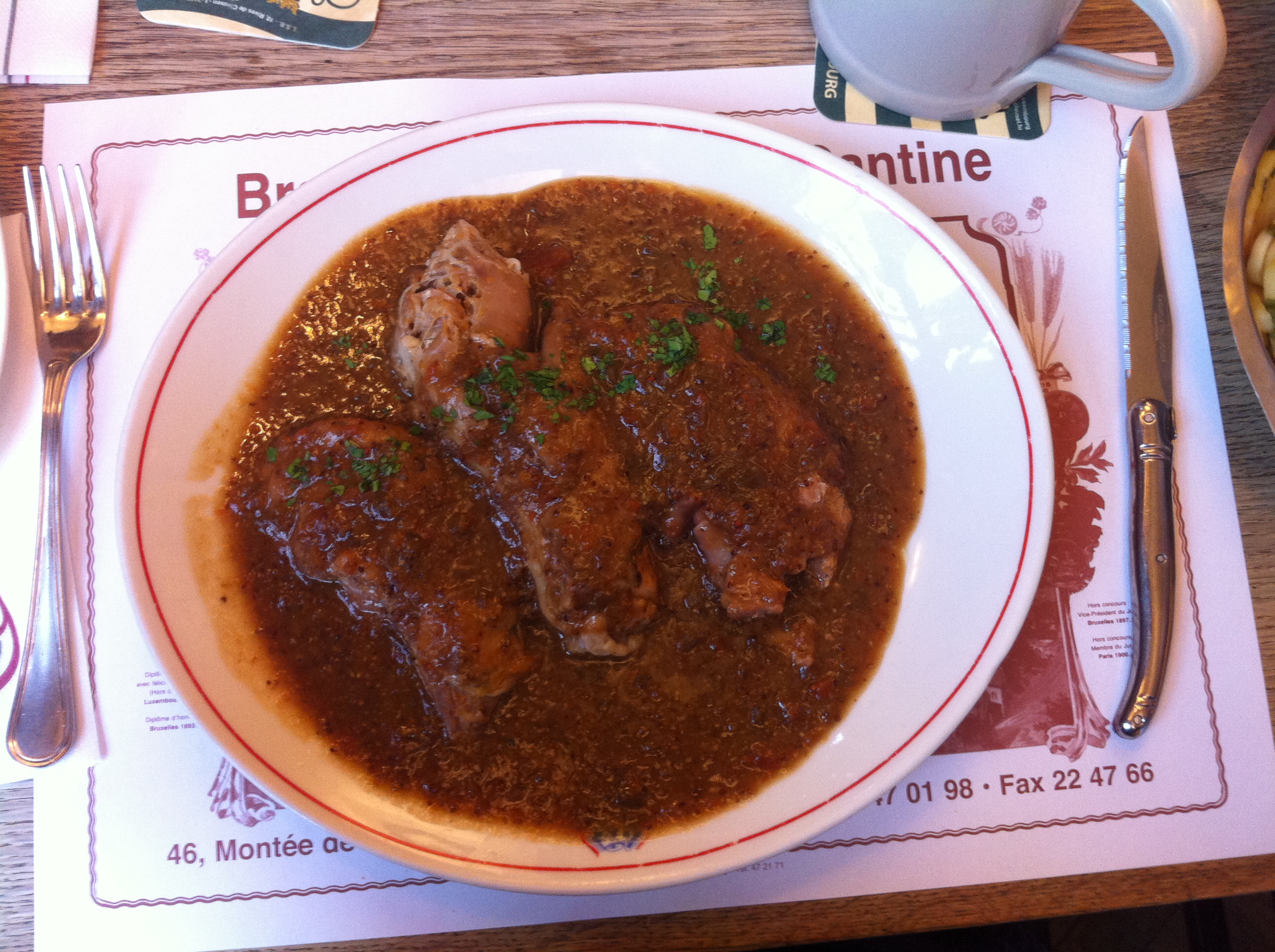
TROTTERS IN MUSTARD
Mousel’s Cantine, Luxembourg City, 26/5
This is a little unfair, as half the fun was the place itself – a little brasserie around which waiters rushed, looking like extras from Asterix, carrying trays of foaming stone beer mugs, platters of choucroute and beans and potatoes – but this dish was lovely. Boned out feet, stuffed with something piggy, braised in a sauce rich with ham and mirepoix, sharp with mustard. You know it’s going to be good when the waiter warns you it’s “special”.

956

PAPADA BUN
Tickets, Barcelona, 12/6
Not actually from the tapas bar itself, we had this from a food festival pitched up in the Ramblas, with various revered eateries offering little bites. I can’t even remember what else was in this bun, just the glazed softness of the brioche and the melting fat of a pig’s double chin.

GRILLED ONION SALAD
Mangal 2, London, 9/7
Blackened white onions and fat tomatoes and a vast pile of herbs, with a couple of lettuce leaves and bits of cucumber for form’s sake, all drenched in pomegranate molasses, lemon and oil. Powerfully delicious, I could drink that dressing by the mug.

WET POLENTA
Polpetto, London, 6/8
Not really a dish? I was going to put the octopus, absurdly tender, spiced just so, charred in all the right places – but then I realised I had completely forgotten the beans that had come with it, and thought it was unfair to include a dish I couldn’t even remember properly. That polenta, though – I can taste it now. So rich, so delicately seasoned.

PUFFED JALAPENO
Billy Franks, London, 3/9
A canapé! Don’t worry, it’s the only one (I don’t make a habit of eating canapés). Served at the Young British Foodie awards ceremony, which we were shortlisted for. I must have eaten about ten of these. A dried, deep-fried jalapeno, topped with an n’duja cheese sauce, pineapple bacon jam and some kind of powdered beef jerky, this was exactly the sum of its parts and therefore filthily tasty.

HERB SALAD
Ciya, Istanbul, 28/9
Parsley, a purple herb I didn’t recognise, white cheese. Pomegranate, oil. Come on.

KOREAN CHICKEN WINGS
The Wingman, Norwich , 20/11
A brand new popup at the Birdcage which I hope we see more of, this is certainly one of the most exciting things to happen to Norwich for a while (not counting Pickle and Smoke, obviously). Sweet, sticky, spicy, covered in sesame, fresh spring onions and herbs, melting off the bone. The kimchi was pretty underpowered, but you can’t have everything. Give it time.

CONFIT GOOSE
The Granville, Canterbury, 23/12
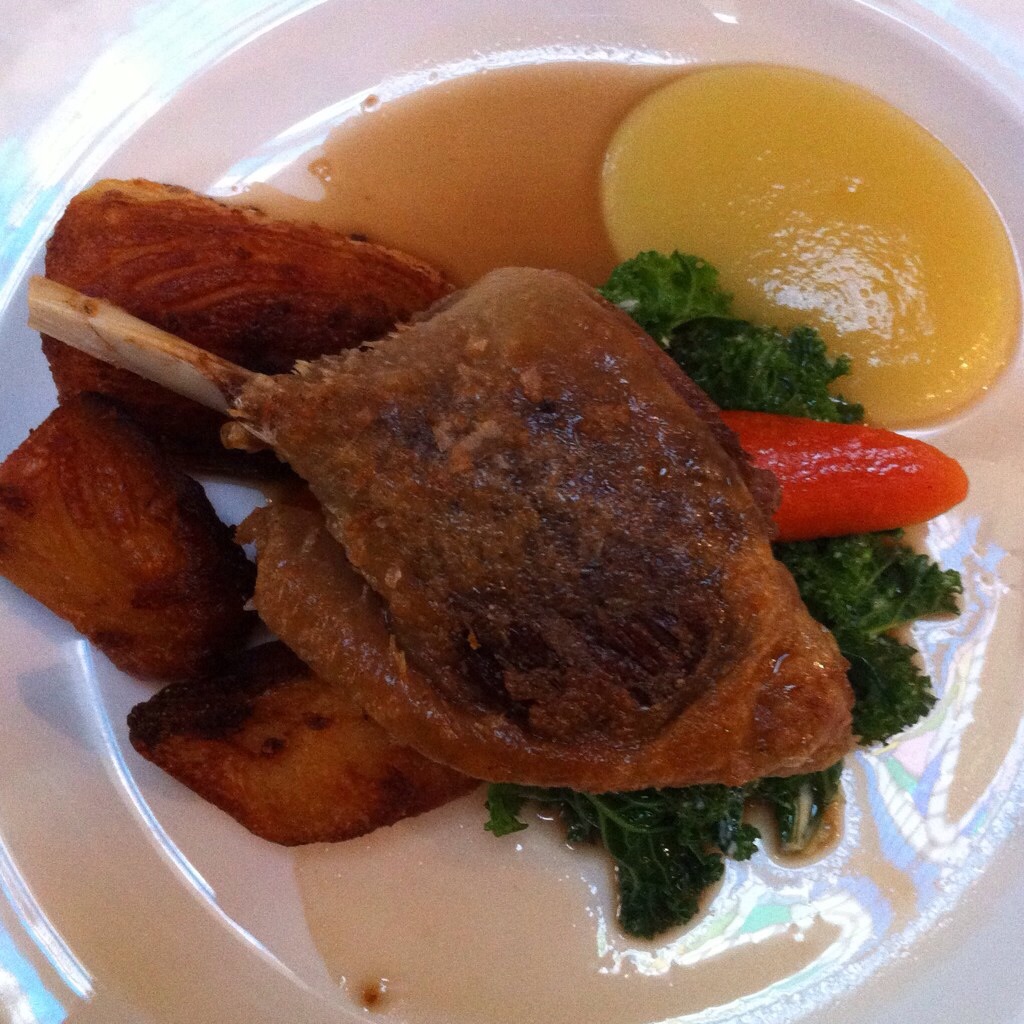
This is the Sportsman’s sister pub. Not quite as fancy, it confines itself to doing ‘pub grub’ very well. Annoyingly, they weren’t doing their cheap lunch deal in December (which they didn’t mention when I booked), so we spent a bit more than intended. Still delicious though. Tender meat, crisp skin, perfect roast potatoes. Nothing groundbreaking, no, but that’s not always what you want. A good start to the feasting period.

IMG_2504.JPG

Fish/Fruit

photo(5)


I’ve never been a particularly keen fish-eater. Fish depends, I think, more than any other food, on a sense of place for its enjoyment, and while some of my favourite ever meals have been simply- or barely-cooked white fish or shellfish, eaten within pissing distance of the sea, I have never felt much of an urge to recreate them at home. Grilled cuttlefish or prawns, sea urchin scooped from the shell, lose their piquancy without the seasoning provided by the crash of waves and the tang of the salt air.


The flavours of oily fish, on the other hand, seem to travel a little better. (Although their flesh does not – the meat is really only good for one day; mackerel fishermen, in times when such things mattered, used to have special license to trade on Sundays so they did not waste their catch). They are more robust, and will stand up to bigger flavours, – smoke and vinegar and punchy fruit – than the vague wisps of fennel and lemon which so often accompany more delicate creatures; this also allows for a little more leeway in the quality of the fish itself. You will never recreate that beautiful bream you ate on the beach, with a squeeze of lemon and a glass of something cold – not with a supermarket specimen, anyway. With oily fish, though, the spices and sauces carry the burden that the flesh can not.


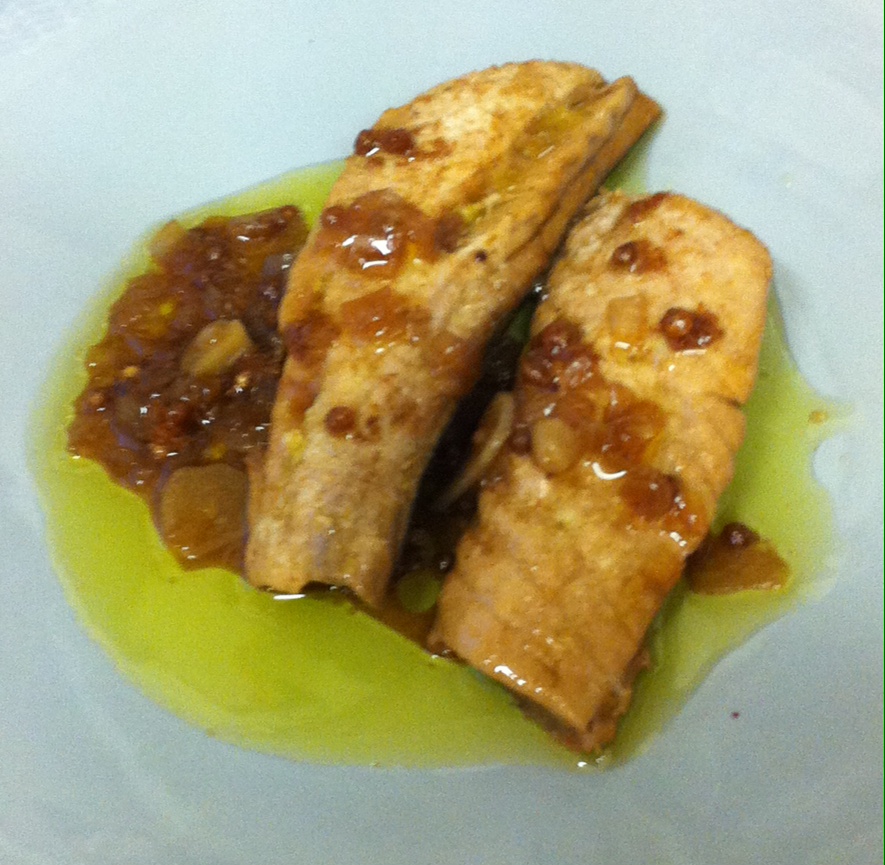
Some of the nicest seafood I have ever eaten has been in Turkey, but very often in the form of the fresh, the white, the inimitable. Fish are everywhere, live in buckets or slithering on ice, twisted with rigor, in varieties unobtainable in Britain, and are often very simply grilled or fried. Sometimes, though, for mezze dishes, the treatments are a little more complex. The following is based on a dish we ate in Kadikoy, the Asian side of Istanbul, a very unusual preparation of mackerel, almost confited in a spiced, syrupy oil.


POMEGRANATE MACKEREL

For 8 as a mezze, perhaps 4 as a starter, with some bread and salad

8 mackerel fillets, pinboned

2 tsp coriander seeds


200ml pomegranate molasses

100ml red wine vinegar

8 cloves of garlic, thinly sliced

grated zest of one orange

6 banana shallots, thinly sliced

500ml good olive oil

salt

You can leave the fillets whole, or slice them in half widthways and then again lengthways for ease of eating as a mezze, either way, salt lightly and set aside.

In a wide pan (ideally wide enough to fit the fish in one layer, and deep enough to hold all the ingredients) gently toast the coriander seeds until they start to give up their aroma, then pour in the molasses and vinegar. Stir them together, then add the garlic, orange zest, and shallots. Let the mixture simmer for a bit, although you don’t want it to cook particularly.

Lay the fish in evenly, and then pour the oil over it. Warm it over a very gentle heat – you will see bubbles coming up through and from the fish – until the pieces of mackerel are just, just cooked, having lost their translucent grayness. Remove the pan from the heat, cover, and set aside – the mackerel will carry on cooking as they cool.

Serve with some of the juices and some appropriate accompaniments.