The Fastest Potato

I’ve never actually read any of Marguerite Patten’s food writing or, until today, cooked even one of her recipes. It turns out, though, that I’ve eaten a lot of her food. A lot of recipes that I remember eating a lot as a child – particularly, in fact, the ones which I always thought were traditional, family recipes – come from Patten’s books. A lot of these were preserves – jams & chutneys, of course, but most notably the mighty family store of pickled shallots. Dad would (still does, in fact) bring back his wheelbarrowful of little alliums from the allotment, and sit in the garden peeling them; then they’d sit in vast brine tanks before their spiced, malt bath. Then, of course, the endless torment before you were allowed to open them. I remember one year popping a jar before they were ready and eating most of the contents; the stomach ache brought on by eating quite a large amount of raw onion was not pleasant, but the vinegar still tasted good.

I didn’t, unfortunately, have time to recreate these, but it felt appropriate to mark what would have been Patten’s 100th birthday with another of her recipes. This page in my Mum’s cookbook is apparently covered in ancient batter, so I assume I used to eat these a lot.

POTATO DROP SCONES

Wee potato pancakes, really. Feeds two or so. I give you the recipe in ounces, as my mother gave it to me.

2oz plain flour

1.5 tsp baking powder

pinch salt (a BIG pinch)

4oz very smooth mashed potato

1oz melted margarine (because it is no longer the 70s, I used butter)

1 egg

1/4 pint of milk

Sieve together the flour, baking powder and salt (does anyone really do this? I didn’t. Just put them in a bowl), then thoroughly mix in the potato. Beat in the butter, then the egg, then the milk.

Heat and oil a frying pan and drop (hence the name) in spoonfuls, flipping them when they start to bubble on top, then cooking until set. Keep them warm while you cook the rest, then eat. I had them with a pork chop and some cabbage, and they were lovely.

First Catch Your Brassica

Vegetables, let’s say, are pretty boring, differentiated mainly by colour and by location of growth – those that sit below the ground are started in cold water, those that flourish above are plunged into hot – and fully deserve their status as “side dish”. Well, they do if they’re treated like that. If all proteins were given the same attention – fish started in cold water, land animals in hot, birds steamed (?) – unbrined, unsauced, and barely seasoned, I imagine we’d have a fairly low opinion of them too. The flavours of most meat we eat come as much from the high heat they are subjected too – the Maillard reactions of sugars and protein – as from any inherent ‘meatiness’, while even plainly boiled animal parts are generally partly or fully cured before cooking, giving the gentle richness of tongue or hams.

Vegetables are much maligned, is the point. One way to rehabilitate them is simply to season the hell out of them, as the Italians do; I’ve talked about this before. That’s what we might call the ham approach. The other, then, is to try different ways of cooking – roast, grill, saute. While not every vegetable can take this kind of treatment, the list of ones that can is sometimes surprising – my favourite quick dinner at the moment is wedges of cabbage, dotted with garlic, anchovy, and black pudding, roasted until browned and topped with cheese – and certainly includes all the brassicas.

The cabbagey tendencies of cabbage and co are brought out only by long boiling, a process which, unless you’re cooking for the toothless (young or old) is totally unnecessary. Stir-fry your sprouts; gently braise savoy cabbages; even, if you must, make kale crisps. Certainly, roast your cauliflower. Everyone, it seems, is doing whole roast vegetables at the moment (I think Tom Kerridge started it), and while an entire cauli makes a nice centerpiece, they do better cooked in florets. Smaller pieces = more surface area = more flavour.

In this stupidly popular dish at the cafe (it’s never left the menu), pan-roast cauliflower is served, Turkishly, with hot spiced butter and cool herbed yoghurt – a pleasing array of sensations. This recipe appears in the forthcoming Suffolk Feast cookbook; consider this a teaser.

ROAST CAULIFLOWER, SAFFRON BUTTER, YOGHURT & PINENUTS

1 nice cauliflower
500g thick greek yoghurt
A small handful of mint and parsley, finely chopped
1 tbsp sumac
100g pine nuts
100ml white wine vinegar
1 tbsp caster sugar
Pinch saffron
100g cold butter, cubed
Olive oil
Herbs to garnish (we use more parsley, amaranth and purple basil – purple is good)
Salt and pepper
Make the two sauces first. Stir the herbs and sumac into the yoghurt with some seasoning and a good glug of oil. Set aside. For the saffron butter, first toast the pine nuts over a low heat until patchily brown and smelling faintly of popcorn, then tip into a bowl. Increase the heat and add the vinegar, saffron and sugar, letting it bubble down to a bright orange syrup.
Now, half on and half off the heat, whisk in the butter piece by piece – it’ll split if it gets too hot, if you add the butter too quickly, or if it’s left about for too long. When you have a nice glossy sauce, add the sauce to the pine nuts, and keep warm, next to the oven or over a pan of hot water.
Right. Preheat the oven to 200°C, separate the cauli into florets, and find a pan big enough to hold them in a single layer. Get it hot and add enough oil to coat the bottom. Now add the cauliflower and some salt, and for a moment pretend you are sautéing chicken. Leave the florets to brown on one side, then turn them carefully and let them brown again. Give the pan a shake and pop in the oven to finish cooking, which should only take 5 minutes or so. (You can do the whole operation on the hob if you don’t fancy turning the oven on for 5 minutes’ work – handy if you’re doing something else in it, though).
When the stalks yield to the point of a knife, they’re ready. Make a pool of herb yoghurt at the bottom of each plate, then toss the butter and some parsley through the cauliflower and pile it on top. Garnish with herbs and more sumac. It’s done.

Simple Suppers


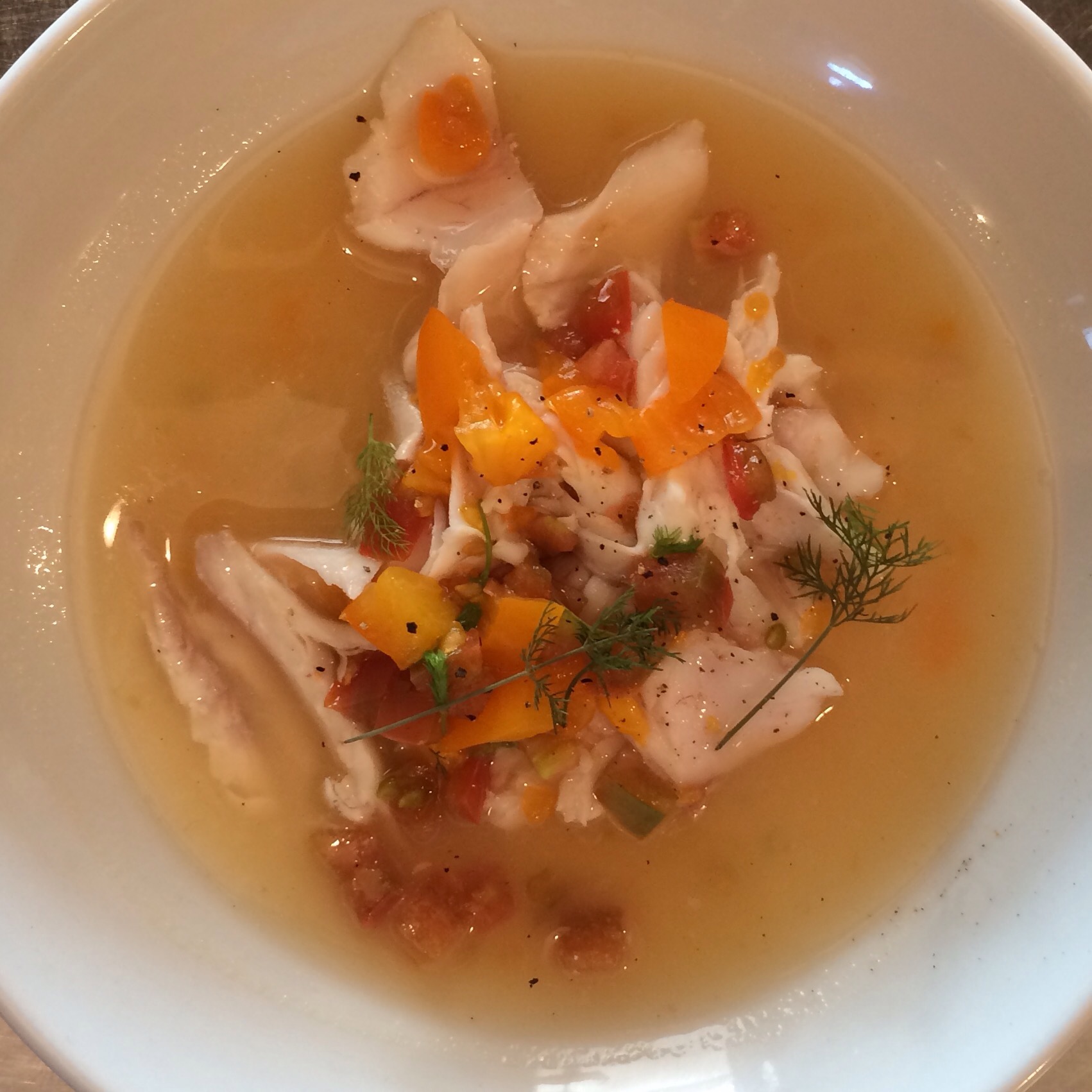
If you take a clear, well made, lightly gelatinous fish stock, season it with salt and sweet white vinegar and infuse it with lovage, mint and celery leaves, the result is a clean soup – a bone broth, if you must – which sits happily in the sometimes awkward period between summer salads and the dense potages of winter, although it might seem a little austere. Add some diced golden and orange tomatoes and gently warm through until the jelly round the seeds seeps out into the pan, then spoon the lot into a plain white bowl, where it will glow with brisk, late summer health. You might have started the bowl with some flakes of salt-baked gurnard, poached, shredded skate wing, or a lightly cured mackerel fillet, barely cooked through in a little spare broth; you might finish it with a fistful of chopped dill, fennel tops and parsley or a spoonful of a pungent, quivering aioli.
This is a way of cooking, precise and simple, that can only proceed from abundance, and as such is incredibly irritating to read about. No-one wants to hear about your well-stocked larder, your fridge full of home-made condiments and seasonings – I’m sorry for bringing it up. In my defence, ours is professionally so, with space to spare in cupboard, freezer, and dishwasher, and the time, inclination and imperative to do the kind of housekeeping, the straining, simmering, bottling, pressing, potting and drying which formed the backbone of our imaginary peasant cuisines; outside of work, it’s a fantasy, but one that it’s nice to inhabit for a while. I don’t think I’ve ever made fish stock at home. Meat broths can be thrown together out of ham bones or roast chicken carcasses, a few scraps of veg, simmered for hours with little attention, but fish needs a bit more care.
If you wanted to follow the non-recipe above, taking the mackerel option, then you’d need to start with another fish entirely. The bones of oily fish do not make a good stock. You want white fish carcasses (flatfish are good), which you’d need to ask your fishmonger for, if you have one and he likes you, or save from a previous meal of, say, fat bream you’ve filleted yourself – which brings us back into the realms of fantasy. I don’t think I’ve ever filleted bream at home either – I roast them whole, and the roast bones do not make a good stock. Cheap white fish fillets will do. Put them, or the bones, in a pan with onion, fennel, celery, peppercorns, bay – you know, all the standard stock accoutrements you have lying around your well-stocked pantry. Cover with water and bring to a bare simmer, which is where it should stay for about half an hour. “There was silence throughout heaven for about half an hour” – that’s when they were making fish stock, carefully watching the bubbles to ensure it never broke out into anything as frantic as a putter. I assume so, anyway.
When it’s ready, you can lift out all the bits with a sieve and pour the clear liquid into a bowl or tub containing lovage, if you can find it, mint and celery, leaving behind any fishy sediment. Lovage is an excellent herb, something like an intensely astringent celery, which I have never seen for sale anywhere, although it grows in this country fierce and strong. You can leave all that to infuse like some unpleasant, medicinal tea, before straining and, if you like, freezing the result. If you do the latter, then take the opportunity to clarify it upon defrosting – it’s an extremely easy process, but one I can’t be bothered to explain here; just writing all that about stock has exhausted me. Google, google, google. Time to cure the mackerel, if you’re still with me. You need ridiculously fresh fish for this. Red gills, bright eyes, rigor mortis, the works. You’ll probably need to find it whole, to ensure freshness, and then fillet and pin-bone it as quickly as possible. The flesh of oily fish degrades incredibly quickly. I generally put the fillets in a tub, floating in an ice-bath, then put the lot in the fridge and make the cure. Equal parts salt and sugar, some crushed fennel and coriander seed; mix together and spread out in a tray. Pin-bone the fish with your fish tweezers and place the fillets, flesh side down, in the cure. Put back in the fridge for half an hour, then wash the cure off and do any necessary trimming. A faff, yes, but it really helps to keep them in the first freshness – and as we know, there is no second freshness.
It’s plain sailing from here, anyway. Warm a saucepan of the stock, add salt, pepper, white balsamic vinegar (fine, white wine vinegar and a pinch of sugar if you must) and some very good, very ripe diced tomato. Separately warm a couple of inches of stock in a pan wide enough to take all the mackerel in one layer. When it’s just bubbling, add the fish and cook very gently for five minutes; lift the fillets out into bowls and spoon over the tomato broth. Top with herbs, and if you want more of a kick, some good, strong aioli, which of course you have in the fridge. Or if you’ve run out –

2 large egg yolks
a spoon of Dijon mustard
8 cloves of garlic, crushed with salt
pomace oil
juice of two lemons
extra virgin olive oil

Blitz the first three in a food processor or whisk together in a bowl. Slowly add pomace oil until it goes really thick. You DON’T have to do this in a constant stream, but it does have to be gradual. When it looks a bit too thick, mix in the lemon juice. Slowly add the olive oil until it looks and tastes right. That was easy, wasn’t it?

Sourer Wine

IMG_3464

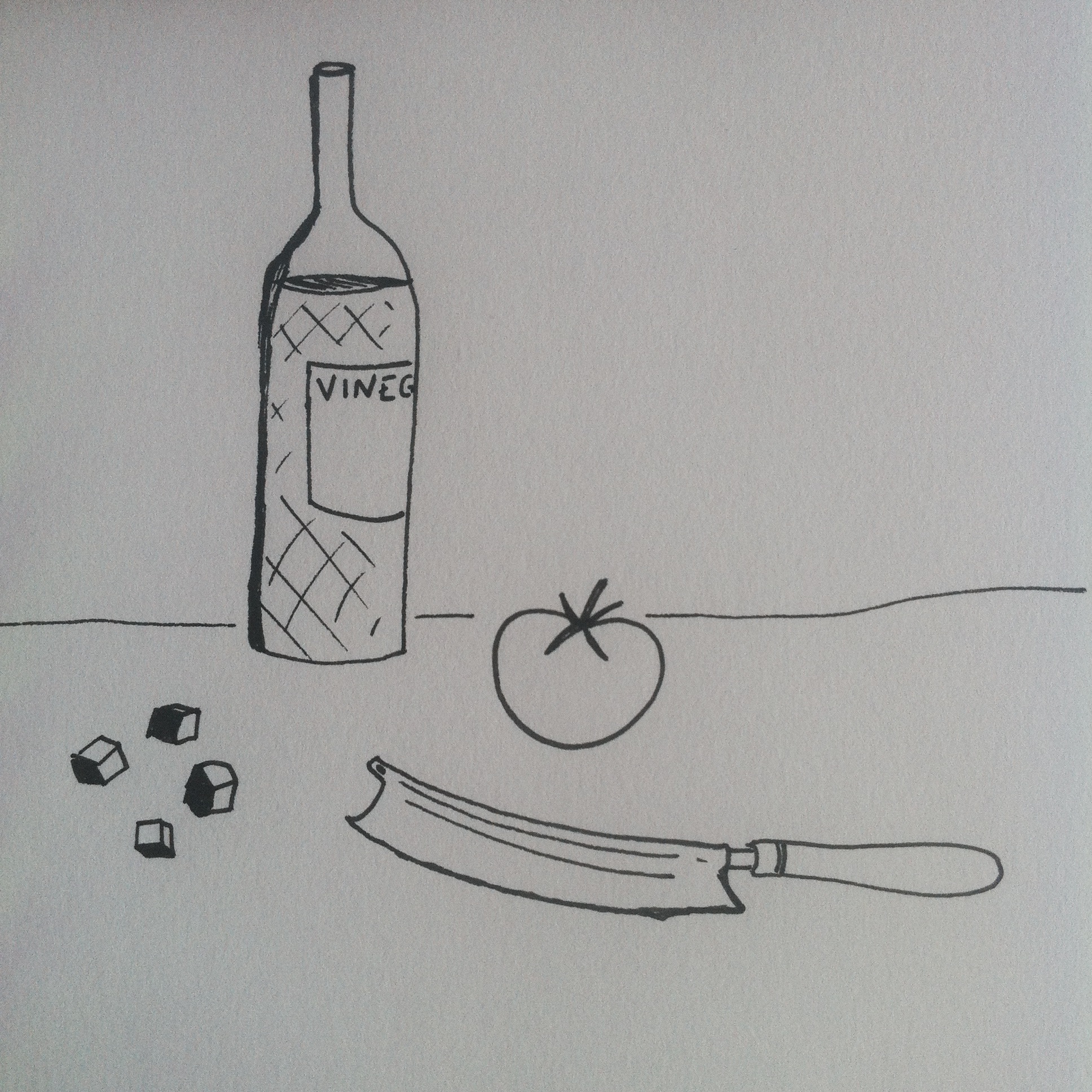
It used to be thought that standing wine was turned into vinegar by vinegar flies; or perhaps it was that these little insects were bred spontaneously out of vinegar, or maybe both, at different times – I don’t remember when or where I read this fact, these facts. Leave a cup of vinegar uncovered for an hour or two, anyway, and you’ll see why this possibly fictional belief persisted – flies you never knew were there will have suicided within it. I don’t know why they do this.
We now know, of course, that wine (or beer, cider, or fruit wine) is turned into vinegar by a helpful bacterium, the acetobacter, which – as far as I understand the matter (about as far as I could throw a gallon of barrel-aged sweet Modena) – consumes alcohol and pisses acid; vinegar-making is a process of controlled decay, whereby leftovers, left to rot, turn eventually into a preservative, without which British cuisine would be particularly bereft. The cured items, tracklements, chutneys, ketchups and sauces with which our food is scattered – roll-mops, pickled onions, pickled red cabbage, brown sauce, mint sauce, Branston, and so on – all rely heavily on the clanging collision of sugar and vinegar, with little recourse to simple salting and lactofermentation, as is found in other pickle-heavy cultures (Germany, Turkey, the US); and where would the chip-shop be without vinegar?
My brother, who has always had a love of extreme tastes, used to use malt vinegar, or possibly non-brewed condiment, as a universal seasoning, for which he was roundly mocked, and rightly so; pasta doesn’t need to be drowned in it. Still, he was on to something. A splash of vinegar works wonders on a long-cooked stew, revivifying what was lost in the murk; the magic that chilli sauce works on simply cooked eggs comes as much from the vinegar as from the heat, that welcome touch of sweet and sour. To my mind, seasoning a dish – that final adjustment, as it’s often called in recipes – means not just intensifying our apprehension of flavour with salt, but a balancing of all the basic tastes on the tongue. To a simple tomato sauce, already rich in umami, we might add a pinch of sugar, a little lemon juice or vinegar; bitterness comes from pepper and olive oil, which also contributes the pleasing taste of rich fats.
Come to think of it, forget that tomato sauce – make a salad dressing, one with a little anchovy in it, designed to perk up gentle, buttery salad leaves. Dissolve sugar and salt in good vinegar, add pounded garlic and anchovy, whisk in grassy oil – you have sweetness, salt, a sour kick, heat and deep savour, and a cleansing, fatty bitterness – you have, in other words, a powerful hit of all tastes, which is why (some) salad dressings are so delicious to drink by themselves. Taste, as distinct from aroma, is a real bodily pleasure that puts you firmly in the present. On the other hand, we are told – we know – that smell is the sense most hard-wired into our memories, to the point where it might have been designed for the express purpose of recollection.
Everyone must have had that feeling when, walking along entirely in the here-and-now, you smell an ex-girlfriend’s perfume, or the sweet, submerged scent of chervil and jump back five or fifteen years into the past, which slices through the present like a good knife through sweating fat. Flavour, then, although we experience it as one thing, is a combination of two very different sensations which dance around each other like two pigeons on a tiled roof, tending first one way and then the other, hopefully, in the end, to meet somewhere in the middle. The goal is that the taste lives up to the promises made by the first drifting smells.
T

his can be particularly hard to achieve when the smell is one happily remembered from childhood, which is why the trend for house-made ketchups, baked beans and so on can be such a minefield – they have such intense early sense-memories to live up to that they must nearly always fall short. The goal is that the opposite happens; that the new, fresher version retroactively transforms your childhood meals, making them seem daring, original and tantalising, in the same way that the most innocuous 50s ballad becomes, after its use in a David Lynch movie, haunting, rich and strange.
I don’t know if this version of brown sauce achieves this universally, but it does for me. HP sauce is a fine thing, the perfect foil to a heavy full English, and a good riposte to anyone who would insult the national palate; how can a country where a spiced date and tamarind sauce is eaten with dry-cured pork as a breakfast item be accused of dullness of cuisine?
BROWN SAUCE
This makes rather a lot, but it seems to keep indefinitely (sugar and vinegar there) in the fridge. You could bottle it properly if that’s your thing. It goes extremely well with black pudding, as well as bringing the bacon sandwich one step closer to perfection.
700g chopped onion
800g chopped fresh tomato
500g dates
500g prunes
250g dried sour cherries
500g light muscovado sugar
2tbsp salt
1l white wine vinegar
a pint of porter
1tbsp peppercorns
1 dried chilli
2 cinnamon sticks
1 tsp cloves
2 star anise
an optional splash of sherry vinegar
Tie up the spices in a little bag or resign yourself to sudden breakfast crunches. Put everything in a big pan, bring to a simmer, and let it putter for two or three hours until soft, cooked and dark. It’ll need some attention to stop it sticking.
Remove the spice bag and blend smooth in batches, adding an optional dash of sherry vinegar to each batch (it perks it up a little). Bottle or fridge, and leave for a week to get to know itself. Apply liberally to cured pork items.

Pickled Fruitfulness


From the amount of water currently falling from the sky, the drop in temperature, and the vast profusion of brambles covering every bit of roadside and waste ground, I think it’s fair to say that autumn has arrived. Last night I made a celery gratin, straight out of Marcella Hazan, braising the stalks in chicken stock and bacon, then grilling them under a blanket of parmesan; warm and savoury but stopping short of outright rib-sticking, it was a good way to usher in the most British of seasons – the one where you can really get down to the business of cooking, after all the saladeering and cold-cut-arranging of summer. Nuts, mushrooms, stone and orchard fruits, the first of our local shellfish; so much that is good comes from autumn. It also, of course, marks the start of the game season.
There is a tendency among chefs to lump in all game as equally good (ethically, environmentally speaking) wild meat, free of the endless problems of welfare and sustainability that surround the farming of domestic food animals; certainly, you can see why. A wild bird is shot in its natural landscape, never having seen the inside of a barn of abattoir; what is killed is sold and eaten. The management of grouse moorland, meanwhile, is claimed to be an outright ‘good thing’ for the local wildlife, although it should be said that this claim is largely made by hunters and gamekeepers. Conservationists, pointing to the killing and persecution of legally protected raptors which seems an inevitable consequence of, particularly, driven grouse shooting, tend to differ.
It is, perhaps, unfortunate that the people making such great strides in terms of ethically produced domestic meat should think so little of wider issues, especially since those issues – of habitat and ecosystem – are familiar from debates on fishing; so it goes. Since the whole thing seems designed, not for any gastronomic benefit, but for the sport of a gilet-clad, blunderbuss-toting aristocracy, of which the meat is almost a by-product, I find the whole thing rather distasteful; perhaps we should leave them their sport, lest they take their guns to the urban poor. Perhaps, though, it should be banned outright, and those who kill protected species fully prosecuted. I don’t know. Best to steer clear of the issue, sticking to the rough shoots, the meat of pests and vermin which can be enjoyed with a fairly clear conscience – that is to say, of rabbits and of pigeons.
I’ve written about rabbit twice before, and it remains one of my favourite meats; pigeon, though generally available pretty cheaply year-round, has a much more gamey character, a rich redness which makes it worth saving for the game season proper. I suppose you could stick one on the barbecue, but for me it isn’t really a summer meat, its affinity with peas notwithstanding. Pigeon does very well, however, with any of the produce of early autumn, with a little mushroom sauce or cobnut salad, or, as here, with blackberries. It is a truism that meat goes well with things that it like to eat; rabbit with carrots and radishes, venison with mountain herbs, pork with pretty much anything – although as pigs apparently dislike plants of the oregano family, I try never to include them in recipes. Presumably grouse live on bread sauce and sherry.
With pigeon, though, there seems a little truth in it, insofar as the aforementioned pea plants they love to rob, and in the fruit of the bramble, which goes as well on a plate with them as in their stomachs – though it should be noted that blackberries, especially when lightly pickled, go pretty well with all game, their inky sharpness cutting through the animal rankness of wild meat. This is an extremely simple recipe, for which I make no apologies – the first meals of any season should always be simple.
PIGEON & BRAMBLES
I’ve said it before, but it’s worth saying again – if you buy blackberries, you’re an idiot. Unless you live in a dystopian city block or a desert, go and find some.

Serves 2
2 whole pigeons or 4 breasts (depends what the butcher has)
2 knobs of butter
2 handfuls of blackberries
200ml white wine vinegar
1 tbsp salt
1 tbsp sugar
A dash of gin
Salt, pepper, oil

First get your pigeon out of the fridge and out of whatever packaging. Pat it dry and maybe give the skin side a preliminary salting. If the birds are whole, pull out the hearts and set aside for a snack.
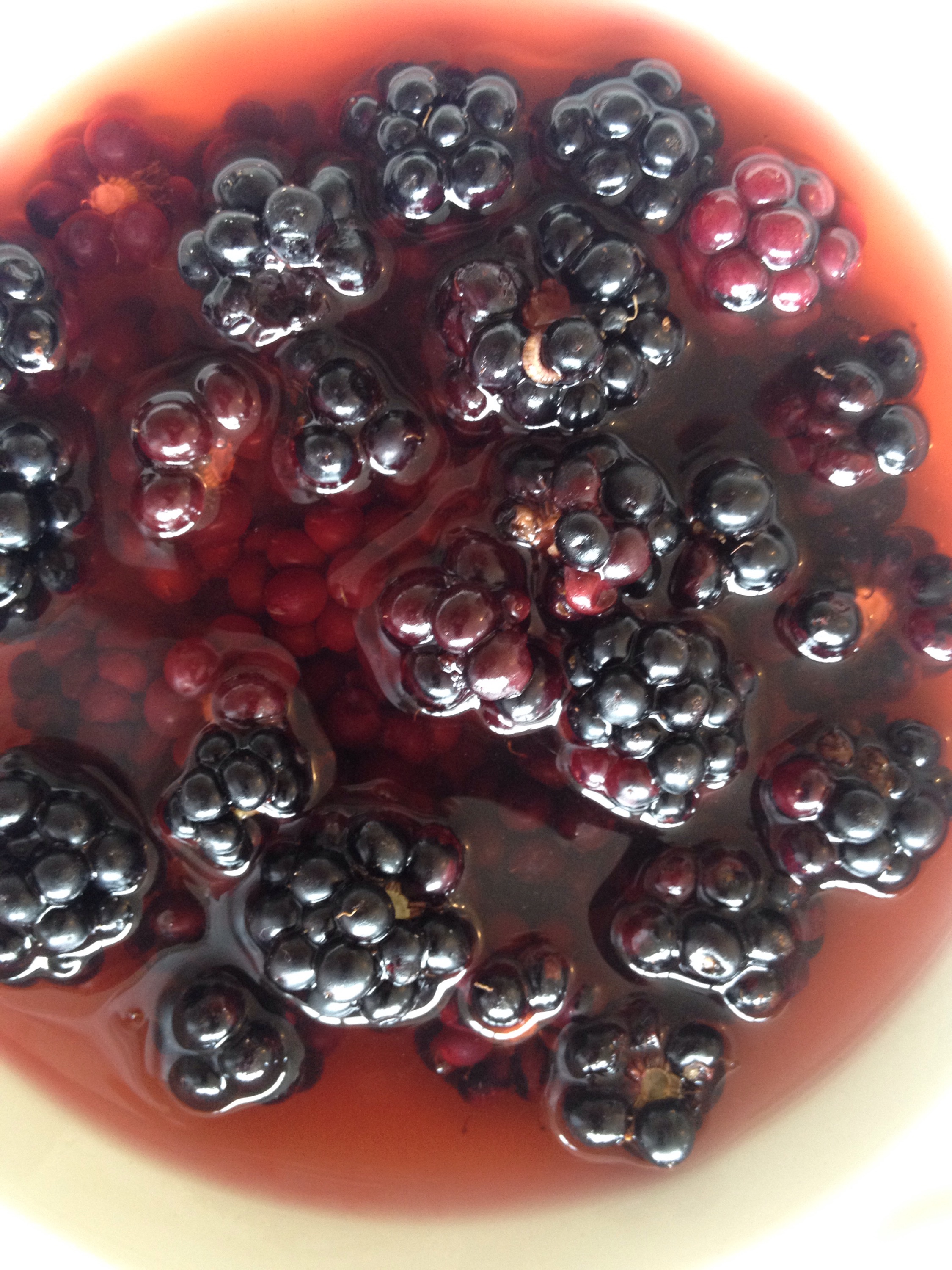
Put the blackberries in a bowl – it’s hard to cook with them in your hands. In a small pan, bring the vinegar to the boil with the salt and sugar, making sure they’re dissolved, then add a little gin and pour over the berries. Leave to cool.
If you’re using breasts, cooking them is really simple. Find a pan big enough to hold four breasts without touching, and get it really hot. Add a splash of oil and then the pigeon, skin side first, pressing down a little to prevent curling. Sear for two minutes each side, then remove to a plate to rest.
Whole pigeons are only slightly more involved. Heat the oven high and get an ovenproof frying pan really hot. Oil, then sear the birds on each breast until nicely brown, then sit on their backs, stick a knob of butter inside them, and put in the oven; eight minutes should do it. The butter should have melted. Put on a plate to rest, breast-side down so the juices flow through it.
Done! Carve the meat (breasts horizontally sliced, birds cut through the middle with a cleaver and opened out) and serve with a spoon of pickled blackberries on the side. Perfectly delicious.

Bottled Light

If you buy, forage or find a boxful of ripe plums, greengages, blackberries or cherries, their taut skins full to bursting of the warm south, then the first thing you should do is sit at an outside table and eat them, greedily and alone, with sticky chin and stained fingers, until you feel nearly ill; this is the appropriate response to abundance. The next thing you should do, though, is make jam. I’m not really a fan of half-cooked fruit, soggying cakes, hanging around with pancakes and meringues. The ripest of raw materials loses a lot of itself when just partially cooked (think of miserable grilled tomatoes), regaining its isness only through thorough boiling; the fact that you can keep the product long into the winter is a definite bonus, although it takes a certain amount of self-restraint.
I always find raspberry and strawberry jams a little too frivolous. Blackberries, if you find them wild (and if you don’t, you have more money than sense), should more properly be made into a jelly, unless you like picking the woody pips out of your teeth all morning; a spreadable jelly, that is, not a wibble-wobble one – although that would also be an option. Clear, jewelled jellies are a fine thing, but take a little more investment of time and equipment than a simple jam, for which the best starting point is the fat, fleshy stone fruit of later summer and early autumn, with their complexities of sweet-sour juice and bitter almond, all of which can be played up, down or with in the cooking process.
I must have read a hundred recipes for jam, often lengthy and enlivened with rose petals or various boozes, which is ridiculous when you consider that there is really only need for one, which could be expressed as a haiku –
weigh prepared ripe fruit,
an equal weight of sugar,
cook, add sugar, boil –
although I suppose recipe writers need to make a crust somehow. Where else would they spread their jam? If you are entering a WI competition or are very fussy about your set, you might need to follow particular recipes or at least guidelines for different kinds of fruit; if you stick to stone fruit, and add a couple of lemons to help the pectin along, though, you should be fine, although I suppose there are a few extra guidelines I normally follow.
I stress prepared fruit, as the stones (especially if you are decadently making peach jam) add quite a bit to the weight. Don’t believe recipes that tell you to skim the stones off during cooking, either – it is a nightmare without end. Always cook the fruit to the consistency you want before adding the sugar, which seems to stiffen them; the slow cooking needed to bring them back to softness will caramelise the sugar, introducing a taste you don’t want – unless you do, in which case ignore this advice. A few well-chosen spices, added with the fruit, can really lift a jam. Don’t just reach for the vanilla pods; Vanilla Is Not A Universal Seasoning (a rule to live, or at least make dessert, by there), and in any case its heady sweetness isn’t really what you want in something so sugary. A star of anise adds a lovely boiled-sweet note to a simple plum jam, but in general I like to add ‘savoury’ spices – peppercorns, cloves, bay and cardamom all contribute a tiny bitterness to the mix. Put in a pinch of salt too, as you should with everything.
Setting point, assuming you have cooked the fruit enough and your proportions were correct, is 108°C. It’s useful, if you have a probe thermometer, to use it alongside the plate test or that thing with the spoon, as one day the battery to your probe thermometer will run out or rust, and you will never buy another. I can never remember how to do that thing with the spoon, but the plate test is easy. Before you start cooking, put a plate in the fridge, then, when you think the jam might be ready, turn off the heat and put a spoonful onto the cold plate. Let it cool and poke it. If it jellifies, wrinkles, and otherwise looks like jam, it is ready; if not, cook for a bit longer and keep testing. Resist the urge to try the hot jam. I forgot to say you should be cooking in a really big pan – if you didn’t, it will probably have boiled over, ruining your hobs and possibly badly burning you, so make sure you do.
The jam should be bottled while hot, a process which again requires a certain amount of care and attention. I suppose once you have poured boiling jam over your foot you will, for one reason or another, never do it again. Of course you should sterilise your jars in some fashion, but if you don’t, just keep the jam in the fridge – although this would be a shame, as jams, jellies and cordials should all really be stored where the winter light can stream through them, casting stained-glass shadows on the kitchen floor.

Oil & Vinegar

  
Back, recently, from a trip to Naples, where despite the pungent cheese shops, the dripping, writhing fish stalls, the oily black coffee, the dangerously rich ice-cream, the puffy delights of deep-fried pizza, the foods that really stick in the mind are the vegetables. (Well, the stewed tripe was pretty memorable, but that’s another story.) Like Sicily, Naples has always been poor, and even flour might be too expensive, especially once those polenta-eaters up north had got a taste for pasta. So the Neapolitans, derided as leaf-eaters (a lot of Italian regional prejudice seems to revolve around food), had to fall back on what they had – which, luckily, was an astonishing abundance of fruit and vegetables. The British version of Italian food has tended to focus on pasta, and the meat-and-cheese-and-olives side of antipasti – all delicious, of course, but they give a somewhat lopsided impression of the cuisine. The Southern love for bitter greens – at one meal, we had the Neapolitan signature, friarelli, as well as braised escarole and fiercely grilled radicchio (not green, true, but you get the idea) – is starting to make an impression here, which is good. It suits our vegetables, as well as the small-plate style a lot of newer Italians are turning to. The ubiquitous vegetable antipasti are perhaps a little naffer, but still worth checking out. No-one’s going to get excited about a roast pepper, but that doesn’t mean it’s not nice to eat.

A lot of this, though, does rely on the afore-mentioned astonishing abundance of fruit and vegetables, which, in most cases, are significantly better and significantly cheaper than you can get in Britain. In Naples, they pretty much give away that roast pepper – dressed heavily in oil, sprinkled with capers – which here would be ruinously expensive. So you get the slightly unpleasant spectacle of new London restaurants offering up cucina povera at new London prices – and doing it rather badly, because the raw materials weren’t good enough to start with. If your pepper isn’t beautiful, do something else with it – and accept that that something might not be especially cheap. Why should it be? It’s not YOUR peasant cuisine. Feel free to live on turnips and gruel. Anyway, for a dish that relies slightly less on freshness and quality (slightly, mind you), as well as appealing to the deep British love for sweet pickles, you could do a lot worse than caponata. I think originally Sicilian, we had this in Naples too, and it ticks a lot of Southern boxes – the vegetables, the sweet-and-sour flavours, the prodigal use of olive oil – though I warn you again that it won’t be very cheap. Buy the veg from a market or greengrocer, and the oil in large quantity from a wholefood shop, and you’ll lessen the burden slightly. Supermarkets seem to conspire against this kind of food.

CAPONATA
This is a very Italian, high-summer caponata – they change the vegetables according to the season, little artichokes being a particular favourite. The only real constant is the agrodolce, sharp-sweet sauce. Feel free to sub in more ‘British’ veg (a glut of courgettes might find a home here) as you wish.
Makes a lot, but keeps well under its oil.
4 large mild onions, finely diced
6 cloves of garlic, sliced
1 red chilli, sliced
6 large vine tomatoes, diced, skins and seeds and all
200ml red wine vinegar
3-4 tbsps sugar or honey
Juice of two lemons
A handful of capers
A handful of raisins
4 aubergines, chopped into little dice
1 head of celery, trimmed and chopped into chunks
Chopped mint and parsley
Salt, pepper, and LOTS of olive oil

Make the sauce first. Sweat the onion, garlic and chilli (tuck in the vine from the tomatoes as well) in a hefty glump (bigger than a glug) of oil, until soft and nearly turning brown, then add the diced tomatoes and a pinch of salt and cook down to a mush. Stir together the vinegar, sugar (or honey) and lemon juice, then add that too and boil down a little. Taste – at this point it should be too sweet and too sour, without enough salt to balance it. That comes later. Stir in the capers and raisins.

Put the diced aubergine in a colander and toss with a big pinch (about a tablespoon) of Maldon’s salt. Leave to drain for about half an hour. (This is NOT to get rid of ‘bitter juices’, but to lightly break down its spongy texture, drying it slightly and making it absorb less oil. It makes quite a difference.)
Meanwhile, heat another glump of oil in a frying pan and sauté the celery, in batches, until nicely browned. Scoop out with a slotted spoon (although you’ll probably still need to top the oil up) and chuck straight into the sauce. Do the same with the aubergines – which will need even more oil – when they’re ready.
Let the whole thing simmer for about ten minutes, then stir in the herbs (a good handful of each) and leave to cool to a warm room temperature, then check the seasoning. It might need a bit more salt, but there’s a lot on the aubergines. Eat with white bread and wine, and get it down your shirt. Get angry and go for a nap. You’re on holiday.

Pigs and Peas

Pity the British food writer. A lovely last week of May, and all those pieces you’ve planned, on podding peas in the evening sun, the joys of stone fruit and cucumber and gin – the rich larder of an imagined English summer – are looking great. You can almost smell the lemonade. Then June hits, and it’s all autumnal gusts of sideways rain. Such is the problem of seasonality in a country where the weather barely pays lip service to the time of year.

Ah well. The whole point of summer produce is that you barely need to cook it anyway. You weren’t actually going to follow that clafoutis recipe, were you? Just eat the cherries out of the bag on the way home, like a normal person. When the late summer courgette glut hits, you might be glad of a few extra ideas (make chutney, leave it to ‘mature’ in the cupboard/shelf/oubliette) but for now (the imagined now, that is, where the weather’s really nice) it’s best to enjoy things as fresh as can be.

None if this helps with the need for early-summer warmers, though. Here, as so often, I suggest ham is the answer. Some conjunction of pea and pig is always appropriate, from London Particular to lovely little-gem-and-herb heavy salads, and this is a great way of hedging your bets. So.

BASIC HAM ADVICE

Ham hocks (gammon hock, bacon knuckle – same thing) are a perfect marriage of hard-working, pullable meat with gelatin-heavy bone and wibbly bits. Butchers usually have them. Get 1 or more if you’ve got a big enough pot.

Onions

Carrots

Leeks

Celery

Garlic, juniper, thyme, whatever

Put everything in a pot, cover with water, and bring to a lively simmer. Keep there for a good two hours, until you can easily pull out the main bone of the hock.

Fish out the ham(s) and leave to cool a bit before shredding, discarding bone, skin, and any wibbly bits that haven’t broken down. 

Strain the stock, which is now worth its weight in gold. The carrots will be deliciously hammy, the rest of the vegetables pretty insipid. Discard those too.

There you are! If the weather’s gone crap, you can cook split peas in the stock, add some shredded ham (maybe fried crispy) and eat with rye bread; glorious sunshine might warrant the aforementioned salad, scattered with freshly prodded peas, chervil and chives, and maybe a fresh curd cheese; somewhere in the middle (most likely, I suppose) and you could braise the lettuce and peas in your ham stock, enriching the broth with a good dollop of aïoli. If you want to just eat the warm ham with your fingers, slurping down jugfuls of broth, though, that’s fine by me. 

Hop, Spring


Another rabbit recipe, yes, but a really very different one. It used to be normal to give a lot more consideration to the age of the animal you were cooking with – a spring chicken needed a different approach than a boiling fowl; lamb, hogget, mutton, all required various strengths and lengths of marinade and cooking. Although a few luxury youths remain (veal, suckling pig, the yearly argument that is spring lamb) and some of the older animals are making a resurgence, by and large slaughtering age has become standardised somewhere at the lower limits of adulthood, or the minimum required to get a good return on the farmer’s investment. This is a shame.

Apart from any ethical argument over the accelerated growth and early deaths of industrially farmed animals, there is a great variety of cooking that comes from the use of different ages of meat, and the techniques needed to deal with them – coq au vin, for example, is pointless with a young chicken, the long cooking required for the dark, glossy sauce being badly suited to tender white meat. The whole rich tradition, in fact, of stews, daubes, ragus, etceteras, would probably not exist without the need to consume older animals – why spend hours braising an oxtail when you could roast a young, dripping slab of calf?
Curiously, a similar standardisation seems to have happened with game. Although old cookbooks are full of advice for how to treat an old rabbit, a young one, a new mother (feed it to the dogs, apparently) the ones you usually get from butchers are generally of a similar size and condition, and need fairly careful treatment, along the lines I set out before. Once in a while, though, if you live in the countryside, or hate your children’s pets, you might get your hands on some younger ones. If you do, I suggest you do the following –

RABBIT, BACON, SPRING VEGETABLES
For 2
1 young rabbit
A small handful of smoked bacon lardons
A bunch of asparagus
About 500 grams of fresh peas, in their pods
3 banana shallots
3 cloves of garlic
1 tsp Dijon mustard
A small glass of white wine
Small handful of parsley
Zest of half a lemon
Salt and pepper
Since you’re unlikely to get a baby from the butcher, we’re going to start at the beginning this time. First thank whoever gave you the rabbit. Remember he has a gun. Take the rabbit, and with a small, very sharp knife, make a slit between one of its hamstrings and the muscle, and slide the other foot through this, making a handy loop. Use this to hang it over something (preferably outside). Cut just under the breastbone, and make a slit down the belly to the groin. Pull out all the bits, which will smell horrendous, keeping the liver and kidneys aside if you want them. (The gutting process, pleasingly, is known as ‘paunching’.) Cut two more slits from the groin, down (or rather up, given how he’s hanging) the inside of the legs to the ankle; you’ll find, with a combination of pulling and gentle scraping, that you can undress him down to the feet; cut the skin round here, leaving the furry slippers on, then pull the skin down over his head and repeat at the other end. (You won’t need the head for this recipe – I’m not a monster. Just hack it off and chuck it away.) Right. Give the carcass a good wash, and bring inside. (Young rabbits shouldn’t need hanging.) OR acquire a baby rabbit from a rural game dealer.
First, with a cleaver or mallet-and-knife arrangement, lop of the still-furry feet. Splay the rabbit out on its front, and dislocate the back legs – hold the body down, and grab each leg in turn, giving it a sharp twist towards you – then use your small sharp knife to cut round the hip joint, separating each leg from the body. Put them to one side, then turn the rabbit round so the front legs are towards you. These are easy to take off – get a good grip under the shoulder blade, where the skin is quite loose, and slice round and under. Finally, with your lopping tool(s), trim the saddle at each end. Keep the ribcage for stock if you’re that kind of person. Or just ask your rural game dealer for a jointed baby rabbit. Or just use chicken, for that matter.
Nearly there. Trim the asparagus and pod the peas, and put the stalk-ends and pods in a saucepan. Add one of the shallots, halved, and one of the cloves of garlic, lightly squished. Cover with water, bring to a simmer, and leave to get on while you start the cooking proper.
In a sauté pan big enough to fit the complete dish (sorry if you’ve got this far and don’t have one), gently heat the lardons – the aim is to render a decent amount of fat from them before they brown. Once you’re happy with this state of affairs, remove them from the pan, whack up the heat, and brown the rabbit (or chicken, if you insist) pieces in batches, giving them a merry salting as you go. Put these with the bacon and turn the heat back down.
Finely slice the remaining shallots and garlic and sweat these (you might need a bit more fat or oil) until nicely softened and starting to brown, putting the bacon back in towards the end of this process. Add the mustard, cook for a minute, turn up the heat, add the wine, let it reduce to almost nothing.
Arrange the rabbit pieces nicely on top (they’d better fit) and add a couple of ladles of that veg stock, which should be ready by now – enough to not-quite-cover the rabbit, bring to the boil, simmer for twenty minutes. Meanwhile, slice the asparagus into pea-ish sized bits. When the twenty minutes are up, add the peas and asparagus, cover with a lid and simmer for ten minutes more. Finely chop the parsley with the lemon and stir in. A swirl of cream would be appropriate, and some extra mustard is a good idea.

Anti-recipes


How many people actually follow recipes? Read them over, gather ingredients, and go through them step by step? Anyone with an interest in food writing will find themselves – through books, magazines, blogs – inundated with “new” recipes (which are almost the only accepted form of food writing now) for seasonal this or exotic that, but how many ever make it from page to plate?

There are, I suppose, two (very) broad categories of recipe – those designed to teach us technique, and those intended to suggest flavours. The first – a baking recipe, or for hollandaise, perhaps – does by its nature need following more closely, and might have something new to impart, a suggestion or explanation that clarifies a mystery of craft. The latter kind of recipe, though, barely needs to exist at all. When you read a recipe for a beef and orange ragu, you are really just reading the suggestion that Marsala and citrus go as happily with beef as claret and allium; the rest of the recipe is just padding, or to put it more kindly, a formal construction which allows the meat (sorry) of the recipe to be communicated.

With this in mind, here is today’s recipe.

SPRING LAMB, WILD GARLIC, YOGHURT

Pink, seared lamb, wilted ramson leaves, rich, seasoned yoghurt. Serves as many as you like.