Detox, Retox

IMG_2587


I know a lot of my recipes are rather time-consuming, long, involved processes that can stretch over a few days, and I do find this style of cooking very satisfying – there is something quite exciting about watching the gradual formation of carbon dioxide in a sourdough, or the slow maceration of garlic in vinegar. There is a time and a place for such procedures, however, and a hungover New Year’s Day is not it.

It baffles me why people decide to start diets on one of the most wretched days of the year. Kale granola is all very well for your long-term health prospects, but is no use at all in wrestling a hangover to the ground. You need filth, fat and protein and carbs, and most importantly, you need them quickly. Given time to sink in, the hangover will easily get the better of you – get the jump on it, though, and you’ll soon see it off. This is a brunch menu that can be prepared quickly, easily, and with your eyes half-closed.

BRUNCH

For two large hangovers

STAGE 1

2l sparkling water (the rising bubbles help remove the hideous taste from your mouth)

a large bottle of tomato juice (I used Big Tom, which is spiced and seasoned; if unavailable, go for something thick, and add salt, pepper, vinegar, and Tabasco)

1 pot of espresso

Full-fat milk

two pieces of toast

Pour the tomato juice into glasses, and the coffee into cups, topping up the latter with some milk (black coffee=heartburn city). The water should be drunk straight from the bottle. Consume in alternating gulps until all are gone, nibbling at the toast in a desultory fashion. This is your detox, so don’t enjoy it too much.

STAGE 2

4 slices of bread

2 large eggs

a small jar of pate, preferably pork liver

6 cloves pickled garlic, sliced

butter

salt, pepper, chilli flakes

Fry the eggs in butter, sprinkling with seasoning and chilli. Toast the bread. Spread with butter, and then two slices with pate, sprinkling over the garlic. Construct two sandwiches, and eat greedily.

STAGE 3

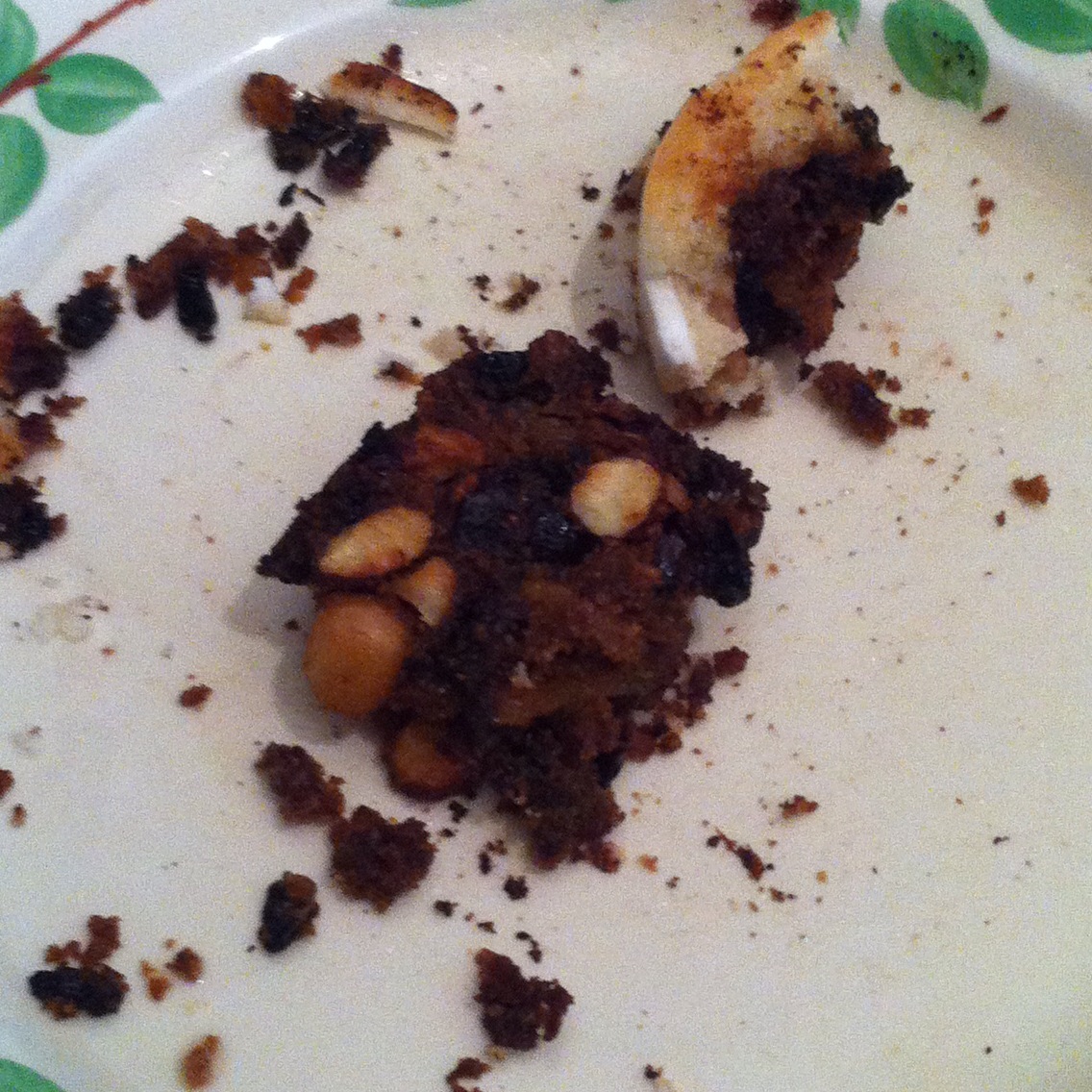
2 slices of Christmas cake

the pan you cooked the eggs in, with leftover butter

Maldon’s salt

Fry the cake very gently on each side, sprinkling over a little salt. The marzipan and nuts should be caramelised and golden brown.

Goodbye hangover; hello a new and better you.
Happy New Year!

Dishes of the Year

650


It’s that time of the year (Listmas? Ugh), when we gorge ourselves on the opinions of others, hope that we can make up for a year of apathy by digesting the entire cultural calendar in a bullet-pointed frenzy. With nothing much else to do (I’m not going to blog my Christmas dinner, am I?) I thought I’d wade into the fray. In chronological rather than ranking order, these are the best individual dishes I have eaten this year. I might have had better meals (that cheap, boozy fish dinner in Barcelona) or sampled better ingredients (salmon pastirma, perhaps), but these are the finest considered, composed plates of food I have sampled. For fairness and variety, I’ve only picked one dish from any meal or holiday – I could have chosen six from the Sportsman, for example – while for reasons of not being an arse, I have excluded anything cooked by myself.

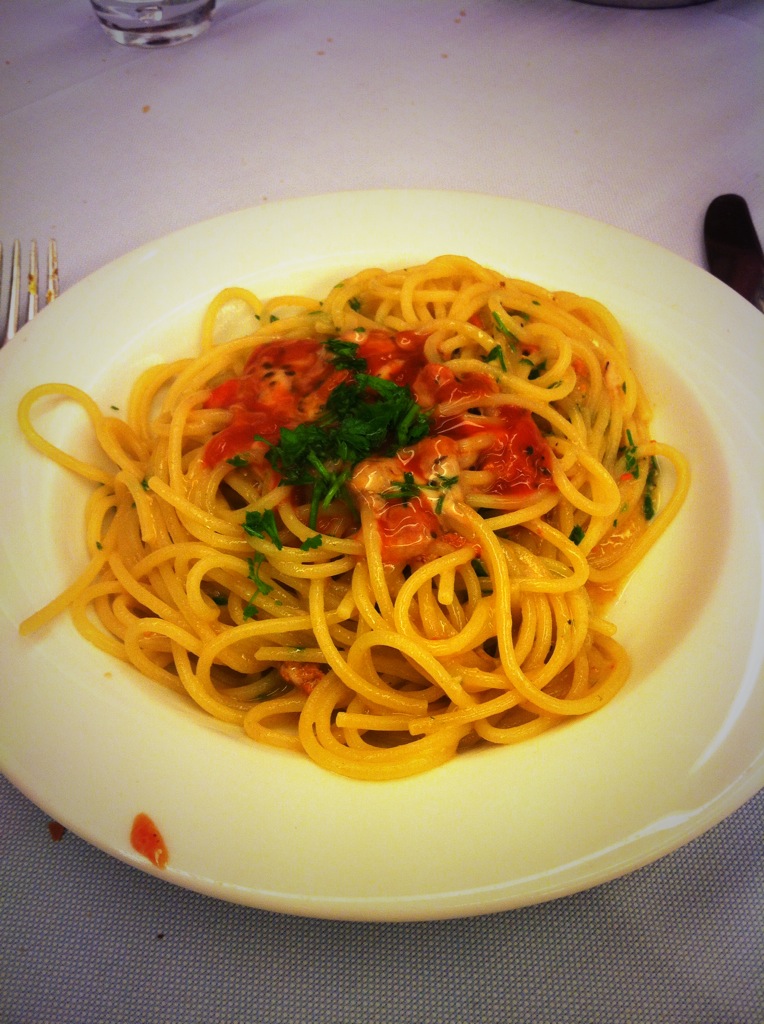
SPAGHETTI WITH SEA URCHIN
Piccolo Napoli, Palermo, 28/2
Just a triumph of simplicity, which I wrote about at the time. Spaghetti, fresh sea urchin gently cooking in the heat of the pasta, parsley (chilli?) and oil. Outrageously tasty, supremely redolent of salt and sea, it made me want to eat urchin all the time.

774


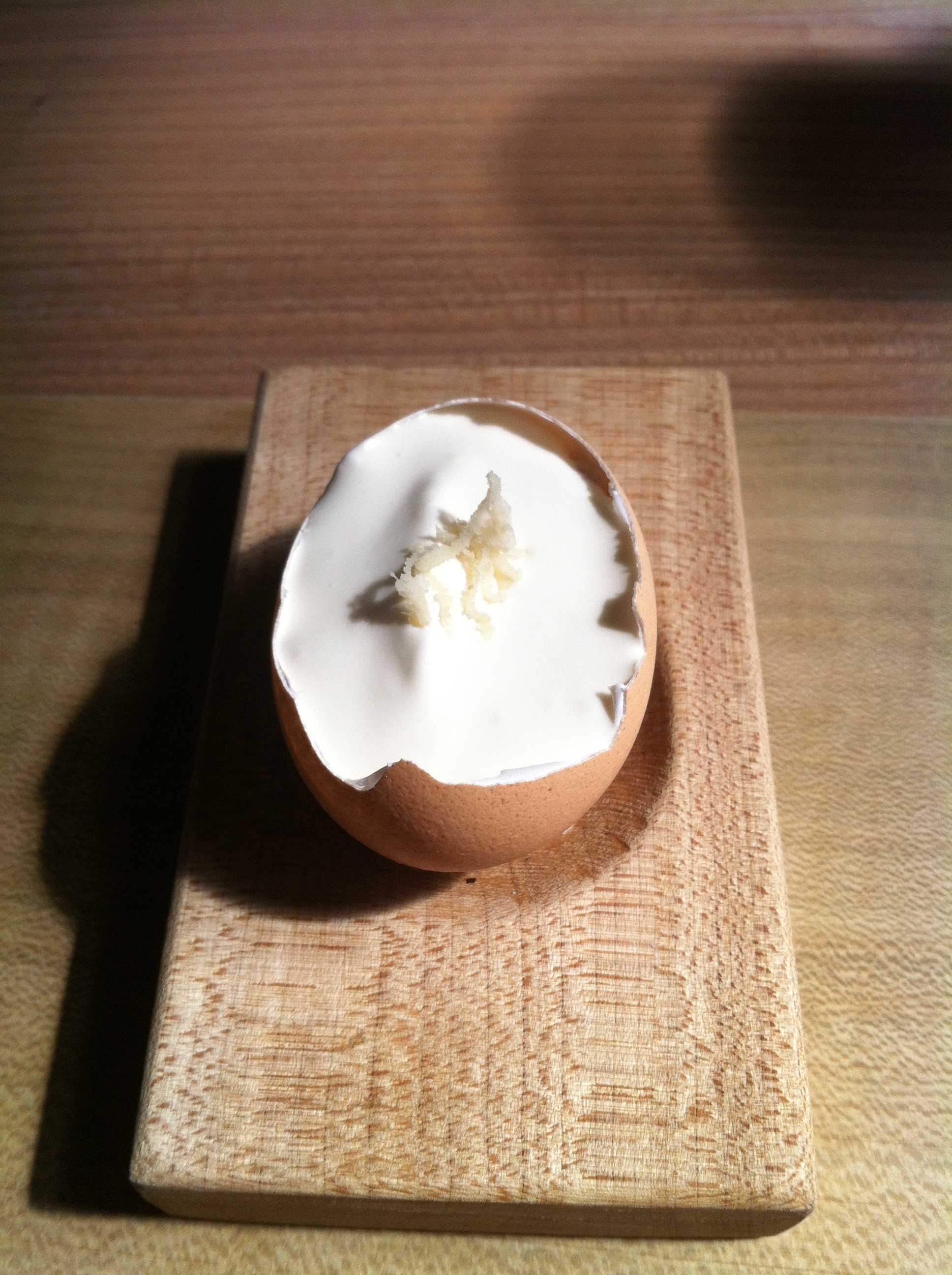
EEL AND EGG
The Sportsman, Seasalter, 16/4
The most impressive part of a very impressive meal, the full tasting menu at this Michelin-starred seaside pub. A warm poached egg yolk, a cool whipped eel cream, hiding little chunks of smoked eel and a violently fresh parsley sauce, all housed in an eggshell. Technically magnificent, beautifully flavoursome.

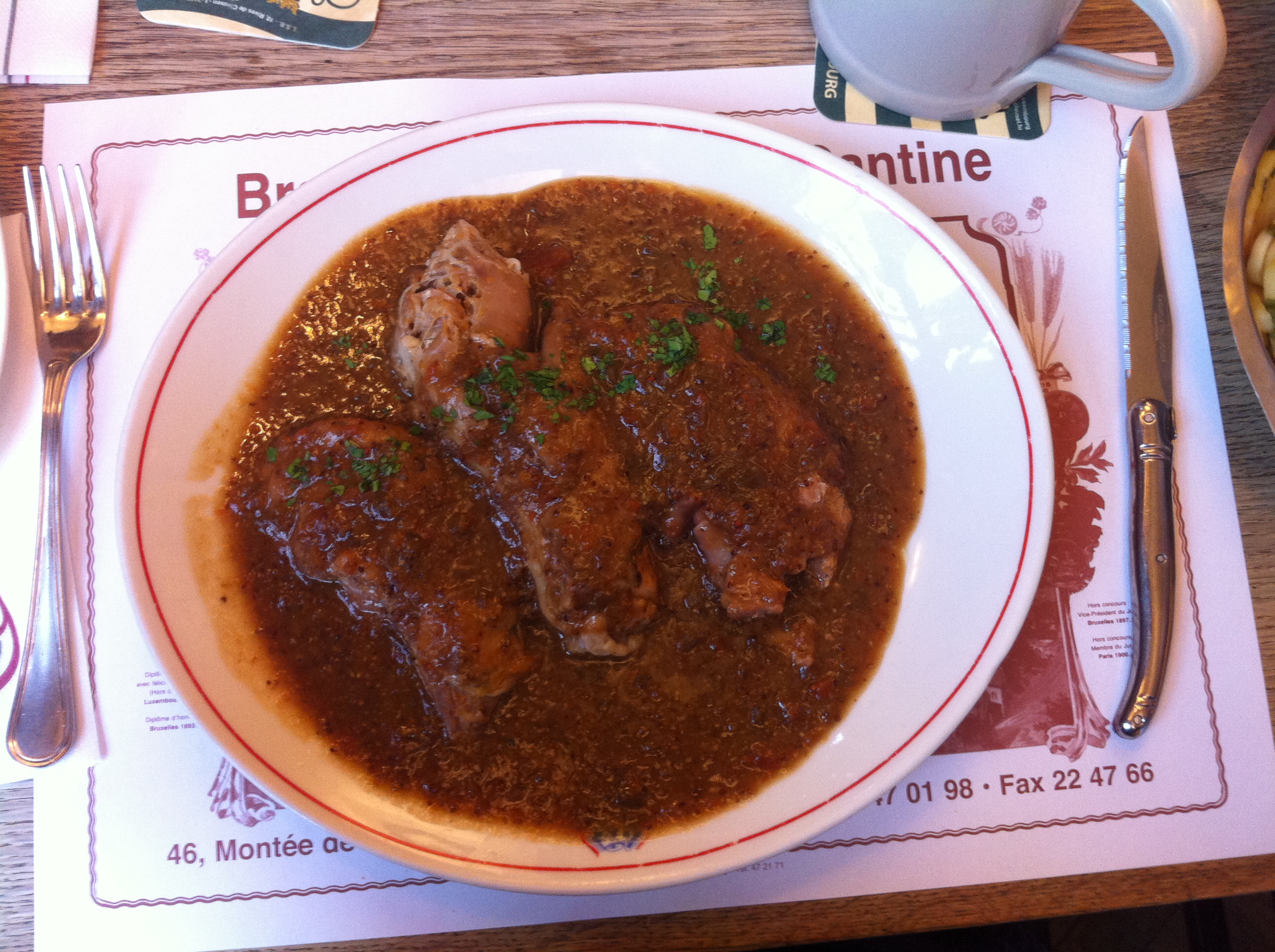
TROTTERS IN MUSTARD
Mousel’s Cantine, Luxembourg City, 26/5
This is a little unfair, as half the fun was the place itself – a little brasserie around which waiters rushed, looking like extras from Asterix, carrying trays of foaming stone beer mugs, platters of choucroute and beans and potatoes – but this dish was lovely. Boned out feet, stuffed with something piggy, braised in a sauce rich with ham and mirepoix, sharp with mustard. You know it’s going to be good when the waiter warns you it’s “special”.

956

PAPADA BUN
Tickets, Barcelona, 12/6
Not actually from the tapas bar itself, we had this from a food festival pitched up in the Ramblas, with various revered eateries offering little bites. I can’t even remember what else was in this bun, just the glazed softness of the brioche and the melting fat of a pig’s double chin.

GRILLED ONION SALAD
Mangal 2, London, 9/7
Blackened white onions and fat tomatoes and a vast pile of herbs, with a couple of lettuce leaves and bits of cucumber for form’s sake, all drenched in pomegranate molasses, lemon and oil. Powerfully delicious, I could drink that dressing by the mug.

WET POLENTA
Polpetto, London, 6/8
Not really a dish? I was going to put the octopus, absurdly tender, spiced just so, charred in all the right places – but then I realised I had completely forgotten the beans that had come with it, and thought it was unfair to include a dish I couldn’t even remember properly. That polenta, though – I can taste it now. So rich, so delicately seasoned.

PUFFED JALAPENO
Billy Franks, London, 3/9
A canapé! Don’t worry, it’s the only one (I don’t make a habit of eating canapés). Served at the Young British Foodie awards ceremony, which we were shortlisted for. I must have eaten about ten of these. A dried, deep-fried jalapeno, topped with an n’duja cheese sauce, pineapple bacon jam and some kind of powdered beef jerky, this was exactly the sum of its parts and therefore filthily tasty.

HERB SALAD
Ciya, Istanbul, 28/9
Parsley, a purple herb I didn’t recognise, white cheese. Pomegranate, oil. Come on.

KOREAN CHICKEN WINGS
The Wingman, Norwich , 20/11
A brand new popup at the Birdcage which I hope we see more of, this is certainly one of the most exciting things to happen to Norwich for a while (not counting Pickle and Smoke, obviously). Sweet, sticky, spicy, covered in sesame, fresh spring onions and herbs, melting off the bone. The kimchi was pretty underpowered, but you can’t have everything. Give it time.

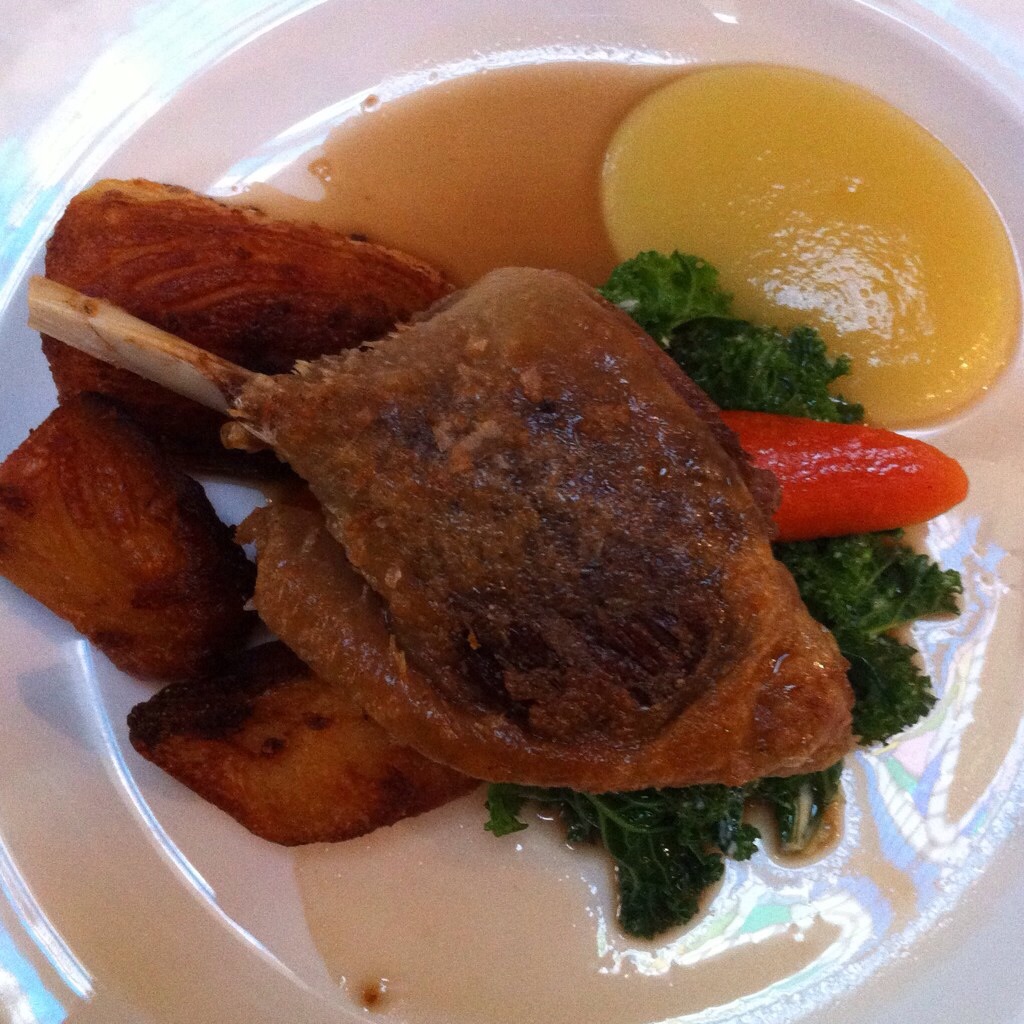
CONFIT GOOSE
The Granville, Canterbury, 23/12
This is the Sportsman’s sister pub. Not quite as fancy, it confines itself to doing ‘pub grub’ very well. Annoyingly, they weren’t doing their cheap lunch deal in December (which they didn’t mention when I booked), so we spent a bit more than intended. Still delicious though. Tender meat, crisp skin, perfect roast potatoes. Nothing groundbreaking, no, but that’s not always what you want. A good start to the feasting period.

IMG_2504.JPG

“It’s not a concept, it’s common sense” (Part Two)

Barcelona. This was a very different proposition to my road-trip, a city break with my girlfriend, also a chef, which was inevitably structured around eating, and took in a far greater variety of eateries, from scuzzy diners to deceptively posh-looking restaurants. The one thing that seemed to unite them was an abundance of ludicrously cheap wine.

We started out at the more comfortable end of the scale, at Senyor Parellada, a restaurant that is all white tablecloths and ties, but with a cheap and robust menu of Catalan dishes and – yes – a very cheap house rosé. We had a gigantic plate of snails, sharp and sweet with garlic, oily, rich and earthy, and a comically large octopus tentacle – it must have been at least 8 inches long – that had just the right amount of resistance, sitting in a creamy pool of mash. Maybe it was the wine (or the gigantic cocktails that followed), but this is held in my mind, in a hazy sort of way, as one of the nicest meals I’ve eaten. Everything was so perfectly itself, from the tiny purple olives we were brought with our drinks to the deep, nutty coffee and the just-so crema catalana, fragrant with cinnamon and orange, we finished with. Catalan cuisine, I subsequently learnt, largely does without the backbone of smoked paprika that defines Spanish cooking in my, and I guess most people’s, minds, a restraint which allows the main ingredients to express themselves more freely.

That restaurant was a lucky find, just round the corner from our apartment, but for our next night we ventured a little further, to the much-recommended Lolita Taperia. Clean, tiled, definitely cool, this is at the lower end of the more up-market tapas bars (the top probably being the Adrias’ Tickets) that are the hip thing in Barcelona. Just as Paris’ modern bistros find top chefs applying their skills to more casual cuisine, so Barcelona’s bright young things (many of whom trained with Adria) are turning their attention to plates of food that are small, accessible, and fun. Not that there was any molecular gastronomy on display at Lolita – the considerable skill of the kitchen was confined to getting a number of small things very right. We had little meat and potato bombas with a deep and satisfying crunch, and a beautiful burrata with that wide, rich blandness elevated by pitch-perfect seasoning. There were pleasingly trashy chicken strips tossed in crushed-up crisps, and, best of all, tender little rabbit ribs, deep-fried in a KFC-style coating. It wasn’t perfect – the burrata came with a distractingly bitter tapenade that overpowered the excellent cheese, and, more worryingly, they seemed to be using Hellman’s as the base for all their sauces – and it certainly wasn’t cheap, although that was partly our own fault for treating tapas as dinner. Pretty damn good, all told, although we resolved to be a little more frugal with our remaining meals.

Having started off in this upmarket fashion, we went more local the next day with one of the excellent Culinary Backstreets tours. My girlfriend had been on one of these in Istanbul and found it a really good introduction to the city’s cuisine, and so it was in Barcelona. The tour took us round the slightly less known Gràcia district, focussing on local cuisine and neighbourhood haunts, and involved more food than I can easily remember. We had churros and hot chocolate by way of breakfast, then coffee, nougat and ‘gypsy’s arm’ cake – I forget the reason for that name – at a long-established patisserie (everywhere we went was at least decades old and family-run), the simple Moorish sweetmeat and the elaborate cake showing two very different strands of Barcelona’s history; after that we went straight on to brunch, or “fork breakfast” as they call it, another favourite of hip young chefs. In a bare room with industrial lighting, we had jellied pig feet and head terrine, fried until crisp and served with soft white beans, and a plate of sobrassada (a sort of spreadable chorizo, rather like the Calabrian n’duja) topped with eggs and honey. The salted minerality of Vichy Catalan water settled our stomachs, and after a quick jaunt around the market (and a tasting and explanation of Iberico hams) it was time for lunch.

This took place in a rather stately old neighbourhood bistro (or whatever the Spanish equivalent is) and was a deliberately unusual menu of of traditional Catalan dishes. We had some sort of aubergine salad to start (I forget what exactly – I had stopped taking pictures by that point, and we had already taken in a lot), then snails, cooked the same as at dinner the first night. This time, though, we learned that in Spain (or at least in Barcelona) they don’t purge or clean their snails before cooking, instead just not eating the guts – which explains the occasional grittiness of the first ones. These were accompanied by a pale, fluffy allioli and a punchy salsa verde. Our main was a hefty chunk of salt cod, coated in more allioli and browned under a hot grill. This was both weird – I’d never seen cooked allioli before – and incredibly delicious. The grilling gave the sauce something of the texture of baked bèchamel or a soufflé, while the cod, insulated from the direct heat of the grill, came away in soft pearlescent flakes. A dish of breathtaking simplicity.

After that we went for vermouth (apparently the coming thing in young Barcelona) and pickles; we picked up some horchata, sweetened tiger-nut milk; and we stopped in another local bar for pan con tomate, warm, just-cooked tortilla, and some sheep intestine, wrapped around twigs, grilled, and served with lemon. A glass of cava in a wine shop stacked 15 feet high with bottles and casks rounded off the tour. I haven’t done justice to either the knowledge or the fierce pride of our tour guide – she peppered the trip with personal and historical anecdote – but we left with an impression of a cuisine that was both deeply rooted in the land and strongly tied to national cultural identity, every dish a little snapshot of history. We also left incredibly full, and I don’t think we had any dinner that day.

The next two days were almost as varied, if not quite as greedy. Both dinners were in small, slightly grotty diners, the first near the sea in Barceloneta, the second in a street off the Ramblas. These were neither trendy nor particularly traditional, at least in the deep historical way the previous day’s lunch had been. What they were was “authentic”, perhaps, and certainly cheap and popular – especially the first, Can Maño, where you queue outside with tourists and locals for a small table in a busy room, around which waiters dash, barely making eye contact as they slam down plastic bottles of wine and plates of grilled or fried vegetables, fish and sea-food. You can get meat dishes, but what’s the point? No-one else is. We had a fat tender cuttlefish and juicy, blackened sardines, scattered with parsley and garlic, fried aubergine, the apparently obligatory pan con tomate, and a salad of sorts. It was hot and fast and loud, and a great meal.

Looking for brunch the next day, we wandered into a food festival on the Ramblas, featuring chefs from a few dozen top restaurants offering tapas-sized dishes at €4 a pop. I’ve been to similar things in London, but they are usually both ticketed and tucked away in odd yards and corners of the city – this was right on the main tourist drag, where you could wander in and out as you pleased. Imagine ambling down Oxford Street or through Leicester Square and finding chefs from St. John, L’Enclume, Polpo, the Fat Duck, whatever, lining the streets and offering their signature dishes for a fiver to whoever was passing through! We had a few bites – salmorejo with anchovies and cheese, a deep broth of ox cheek and chickpeas, an astounding bun from Tickets, stuffed with the meat from a pig’s double chin – and wandered off past the still-busy tourist-trap restaurants feeling smug. Wanting to make the most of this opportunity, we came back for pre-dinner tapas, focussing on the “auteur” section of the festival – higher-end dishes from Adria’s disciples (still only €4 though). Yes, there were foams and things, a something of something on top of an escabeche of mackerel, but there was also a steak tartare of great depth and piquancy and some calamari that was just really, really good calamari. Our meal in the afore-mentioned diner, the Romesco, was something different again – although coming mainly from the grill and the fryer, and accompanied by rough white wine, the ingredients were, in the main, of the land – although we did have some enormous prawns. I had a crisp and succulent rabbit, and to start, half a sheep’s head, which I think had been braised and then deep-fried. Eating this was an extremely enjoyable activity that I would recommend to anyone. From the caramelised shreds of the cheek, to the juicy and fibrous tongue and the cloudy pap of the brain, it was like getting the whole hands-on nose-to-tail experience in one neat package, and, somehow, a fitting last meal.

If this all seems quite exhaustive, it’s because I wanted to convey the sheer variety of food available in a cuisine that has not ossified, as you sometimes find in France or Italy, nor lost the thread of its own tradition, as it has here. Yes, I know Barcelona is a major city, and I know you could find a similar variety if you knew where to look in London, say – but not, I think, in the same top-to-bottom and nose-to-tail way, where food is traditional and varied and good and accessible to all. We didn’t even eat a single paella.

“It’s not a concept – it’s common sense” (Part One)

I haven’t posted anything here for a while, partly because I’ve been going through a fairly major life upheaval, and partly because of a couple of holidays I’ve been on. Both gave me quite a lot to think about in terms of food and culture, and it’s taken me this long to sift through my impressions of the two.

First up was a trip around Europe with two of my brothers, taking in France, Belgium, Germany and Luxembourg, not a place I ever thought I’d have occasion to visit. This wasn’t a particularly food-based trip – the reason or excuse for it was a journey round various WWI and WWII (and some Napoleonic) battlefields and monuments, some with a family connection, most not – but obviously we had to eat every day, and I was put in charge of finding places to do this.

I don’t really know what place French food has in the popular imagination any more – obviously it will always have a certain cachet, but I think the rash of bad or indifferent restaurants, serving 3-course set menus to tourists, have long since damaged France’s (or at least Paris’) reputation as a place where it is impossible to eat badly. Away from the denser tourist areas, though, and across the border into Belgium and Luxembourg (both places that suffer less from the weight of reputation), the general standard of restaurant food is still very high. Aside from the endless and ever-changing parade of continental breakfasts, which were ever bad so much as peculiar, and fascinating in their minor regional variations, I think we barely had a disappointing meal. There was one, I think in Cambrai, where I had a serviceable andouillette, my offal-sceptic older brother accidentally ordered veal kidneys, and my other brother an indifferent carpaccio.

That was a blip, though, and at any rate somewhat our fault. In the main, guided partly by recommendation, and partly by a mix of instinct and slightly mystical criteria – the only restaurant that had no English reviews on tripadvisor, a green rather than a red frontage – we managed to eat very well in a succession of small towns about which we knew nothing. Granted, I think our best meal was in Luxembourg City, at a place which came recommended by the Guardian – a wood- and leather-lined place called Mousel’s Cantine, where we ate pig feet in a rich and sharp mustard sauce, roast hock, salt-pork shoulder, with choucroute and beans and potatoes, swilled down with stone mugs of beer overflowing with foam – but we dined almost as well in Verdun, where the first place we happened to walk past (away from the main tourist strip) turned out to be a tiny, slightly hipsterised bistro with excellent pastis and beer, and a great set menu featuring an outstanding salad of confit gizzards and a lovely plate of guineafowl. Even the one obviously touristy restaurant we went to, on the main touristy square in Metz, had, on an illustrated and laminated menu of ‘local specialities’, an impressive dish of whole veal head, boned and rolled, with a punchy sauce gribiche and something else, garlicky and sharp, that I couldn’t quite place.

Fergus Henderson likes to declaim that the idea of nose-to-tail eating is not a “concept” but merely “common sense”, which I think is slightly disingenuous on his part. Over here, it is a concept, and one which he has done extremely well out of. But it really is in France, on the Continent, along with the idea that food should be good, and affordable, and the entire process of eating it pleasurable and satisfying. Many of the places we went to were small, boring, provincial towns, famous because Verlaine had been born there and never come back, or Rimbaud had grown up there and hated it, or for their proximity to heroism, some glorious act that had little to do with the sleepy bourgeois town it is commemorated in. Imagine going on a tour of Civil War battle sites in the Home Counties and the MIdlands, and finding, in every village and commuter-belt ghost town, a cuisine that was rooted in tradition and place yet alive, moving with tastes and times and fashions, animated by quality of ingredient and pride in technique. Imagine that was common sense.

I think that’s enough for now. More on Spain soon.

How Do You Like Your Eggs?

“How would you like your eggs?”
“Over-medium, please – ”
“Just poached, fried, or scrambled, sir”

“Why are Americans so picky about eggs?”

Good question. I think my reply was something along the lines of “eggs are more of a thing over there – diners all do them to order, as you like” which wasn’t really an answer, just another way of saying “Americans are picky about eggs”. I did him his eggs over-medium, anyway, partly because I like American pickiness about eggs, and partly because I didn’t want him to think we had all the eggs pre-cooked, sunny-side-up, in a congealing proteinous mass under the hot-lamps. I kept thinking, though – why are Americans so picky about eggs?

An easy answer would be that they aren’t, particularly – maybe they are just more vocal than the reticent British about their pickiness, more active in getting what they want; I don’t think this is true, though. A hungover Englishman is perfectly capable of being quite vocally and unpleasantly picky about his breakfast, although this more often seems to manifest itself in a lust for the exact shade of burntness on a sausage, or a peculiar hatred of black pudding. When they do make specific egg requests, perhaps remembering the lost estate of their mother’s fry-up, or some half-forgotten greasy spoon, they will fumble for the words; a Brit could never coolly ask for “eggs over-medium” – instead, you get semi-coherent requests for “er, flipped, but sort-of runny”, “something between a fried egg and an omelette”; occasionally, someone will ask for their egg sunny-side-up, because they saw it in a movie, only to discover they meant over-easy, if they meant anything at all. We lack the vocabulary to be picky about eggs.

More generally, and setting aside professional and keen amateur cooks, I think we lack a vocabulary to talk about the processes of food. I saw, recently, on a cafe menu that an American friend of mine posted on Facebook, a bagel filled with (among other things) “minced” onion. I just don’t think you’d see that on a menu here; most people would not know or, more importantly, care what “minced” meant in that context. “Onion” would suffice – the process by which it got into a bagel is irrelevant.

Why we don’t seem to have developed a layman’s vocabulary for talking about one of the most fundamental activities of life is another matter. In America, I think, eating is a much more public activity than it is here. In England, there seems to be a strong divide between eating in private, which can be a pleasurable, even hedonistic, experience (yes, I know we have a very lively restaurant scene, but I consider that a form of semi-privacy), and eating in public, which must be functional, food-as-fuel, and hopefully a little unpleasant. I’m talking about eating on the street, at service stations, in shopping centres, even diners or whatever – places or occasions where you eat out because you are out and you need to eat, not because you have gone out to eat.

Take a petrol station sandwich – sliced bread, margarine, some imitation of cheese, perhaps the ghost of ham, the wilting corpse of salad, all packaged at some indeterminate location some indeterminate time ago. There is no enjoyment here at any level. This is fibre and protein, designed to stop you feeling hungry so you can carry on with whatever you’re doing. It’s barely even nutrition, just fuel, bought along with your petrol. The vast majority of gas stations, on the other hand – or at least the ones that I went to – have their own deli counters, where your sandwich will be made for you, to order, to your specifications, with a choice of breads, of cheese, of meats… These are not places where people go to eat; they fulfil the same function as the shops at service stations, they just do so much better, with attention to detail and some kind of deep-seated belief that all food should be worth eating. Yes, of course there is also an America of chains and mall food courts, but that is relatively new and not, I think, as pervasive as the back-road small-town America of grocery store delis and of diners where you can get your eggs or your burger or your steak cooked any damn way you please, and where that is not pickiness but simply a reasonable thing to expect of food that is being cooked for you in exchange for money.

There are, I’m sure, any number of reasons why this is lacking in Britain – a hangover from Victorian uneasiness about taking pleasure in food, a class-based distaste for the service industry in general, our supposed love of privacy in our pleasures – and it is, perhaps, gradually changing, although it is telling that the current crop of more casual, cheaper eateries (Pitt Cue Co., the Polpo group, Yalla Yalla) all look East or West for their food and decor. Yes, we have farmers’ markets and delis and food vans, but until we are no longer expected to eat a day-old parody of a sandwich entombed in plastic as a punishment for wanting to eat in public, we will not have a ‘food culture’, just an eerily accurate impression of one.

“I Love Transitions”

So. The Sportsman, self-styled “grotty rundown pub by the sea”.

It is traditional, it seems, to begin any review of this Michelin-starred Kentish institution with a lengthy description of the bleak Whitstable coast, the windswept seaweed, the desolate, unforgiving car park. Well, we arrived for lunch on a sunny April day and it was beautiful, lambs playing in the Monkshill fields, windfarms turning lazily in the distance. We weren’t here to look at the landscape, anyway; we were here to eat it.

The other leitmotif in reviews of the Sportsman is the focus on terroire, on the sourcing and creation of ingredient, a fetishisation of produce that often comes at the expense of the quite remarkable range of technique on display. This is, I suppose, quite understandable; ingredients are easier to understand, to quantify, than craftsmanship, and at any rate, those used at the Sportsman are worthy of comment. I went into all this in my last blog post so won’t rehash it here, but they make their own salt, for God’s sake, a commitment to the handmade and to the local which puts most other restaurants to shame.

Happily, though, they wear all this lightly. I was half-expecting a lengthy spiel about localism, a tediously didactic recitation of ingredient and providence, with each one of our 13 courses; it never came, either from the succession of cheerfully knowledgeable waitresses, or from the printed menu we were given at the end. They point up their “home-churned butter with Seasalter salt” – but that, I think, is fair enough – and they mention their Monkshill lamb, and that’s all. Remarkable restraint, considering the vast majority of their ingredients are grown or foraged in the immediate vicinity of the pub.

Anyway, the food. Never having eaten a tasting menu or any other Michelin-approved meal, I was both excited and almost nervous at the prospect of so much food, but our first few bites were so tiny, so playful and approachable. We started with a little cheese and onion biscuit, and a cocktail stick of pickled herring, rhubarb cream, and something that may have been flapjack; I forget exactly, and these little bites aren’t listed on the menu. Both just-so, biscuits that seemed mostly butter sandwiching a cheesy goo, a neat square of sweet, tangy fish, these sharpened the appetite and were gone, as they should be. Next was a pretty impressive piece, consisting of a poached egg yolk, smoked eel, and parsley sauce, housed within an eggshell and topped with a light whipped layer of something. Everything was at a different temperature, warm yolk, cool cream, the rich eel somewhere in between, sharpened with a violently green parsley puree; a lot of technique for two bites.

The next course was quite a contrast – two oysters, one of the Whitstable natives and one plain old rock, almost unadorned. The native was raw, topped with a still-warm disc of their own (of course) chorizo, the other poached, sprinkled with dried seaweed and crystals of a rhubarb granita. Again, both offered a nice little contrast of texture and temperature, but here the emphasis was firmly on the ingredient. I heard Stephen Harris chatting to another customer about the oysters, and got the impression that he didn’t think much of rock oysters, hence the amount of dressing they received; the native, with its crispy, spicy hat, was far nicer anyway. The menu continued in this vein, with ingredient and technique switching the lead, each reasserting their dominance in turn. Some crab followed the oysters, tender (but not overcooked – the first time I’ve really enjoyed crab) strands of white meat sitting atop carrot of an identical texture, the whole dressed with hollandaise, plain, buttery, apparently simple; this was followed by a salmagundi of, well, all sorts of stuff – the waitress started listing ingredients and concluded with “…and whatever else you find”. I found another poached egg yolk, ribbons of carrot and courgette, crisps of parsnip of beetroot, roasted beetroot, a celeriac (I think) puree, more of that parsley sauce, and some pellets of cauliflower that may have been inspired by Jamie Oliver, although I hope not.

After this confusing, if delicious, plate, a riot of craft and texture (and a lot of fun for a salad), we were presented with a slip sole each, grilled with seaweed butter. Back to the ingredient. This is one of Harris’ signature dishes, local fish, extremely local seaweed, and my first thought was that it was extremely, almost perversely, underseasoned. Relaxing into the simple ritual of eating, teasing the delicate flesh away from the bones, and letting the gentle umami of the fish and seaweed wash over my tongue, it made sense, a moment of calm, a chance for some breathing room before the main courses (if a tasting menu can be said to have such things). Each of these – fish and meat – was preceded by a little deep-fried nibble from the same animal. So we were presented first with battered turbot skirt, juicy and ridiculously tender, accompanied by wild garlic mayonnaise, before a bowl of braised turbot with sea vegetables and a sauce of smoked roe. I’m not a massive fish fan, but if forced to choose a favourite dish from this menu, I think this would be it. The rich, saline hit of the roe was astonishingly powerful, especially after the soothing grace of the sole, the fish itself meaty and tender, and the vegetables – sea purslane and sea beet – a welcome and vivid splash of iron green.

Lamb was next, first in the form of tender chunks of neck, breaded and deep-fried, with a mint sauce seemingly inspired by nuoc cham and the like – thin, sweet, sharp, aromatic – and then as a plate of roast rump and shoulder. Although this dish (lamb, some sweetly tender cabbage, a thin gravy) showed off its ingredients with a grace and a pride in simplicity that was almost Italian, it was also a bravura display of technique from the kitchen, a masterpiece of meat cookery. The rump was beautifully, perfectly rare, evenly pink and tender, with an outside layer of crisply crackled fat; the shoulder a crisp, even nugget which collapsed into shreds when poked, slow-roasted to perfection, powerfully savoury and delicious.

Desserts. A rhubarb ice-lolly, sitting in a shot glass of cornflake milk – pinched, I think it’s fair to say, from Momofuku – was pretty and fun, some comic relief after all that cooking. Both components were spot on but I’m not sure they had much to do with each other. Next, a buttermilk mousse, sprinkled with buckwheat, drizzled with raw honey, and accompanied by a buttered slice of madeira cake and a shot of cold camomile tea, was a rather more serious proposition, and one which the kitchen was rather unsure about, judging by the waitress’ questions. Desserts aren’t exactly my thing, but this was well judged as the end of such a big meal, sweetly indulgent but still – thanks to the buttermilk and camomile – refreshing, clean. Coffee and a pair of miniature tarts – salt caramel and chocolate, custard and nutmeg – rounded off an incredibly impressive meal.

One of the most impressive things, I think, about the Sportsman, is that the food remains dominant. Jay Rayner remarked, in his Observer review, that the menu read like a “greatest hits” of modern classics, but it doesn’t, in the eating, come across like that at all – apart from that glass of cornflake milk. Stephen Harris has managed to subsume his influences and his cornucopia of produce into what he calls “a narrative, a story almost of this area” but which seems to me more like an edible landscape, a snapshot of his domain, caught between the sea and the land.

20140421-163052.jpg

20140421-163106.jpg

Location, Location

I’m going for a meal next week at The Sportsman, in Seasalter, and have been researching it avidly, scanning old reviews to get some idea of what we can expect from the (rather large, pre-booked) tasting menu. Although a few dishes pop up frequently (oyster and chorizo, some kind of arrangement of lamb and seaweed), it is not individual dishes as such which form the focus of most reviews. It is the Sportsman’s location that really holds the interest – its position as a “grotty rundown pub by the sea”, as their Twitter profile has it – and the astonishing range of ingredients they wring from that location, their fierce commitment to localism.

Localism, in the world of food, comes in two main forms – localism of recipe, and localism of ingredient. Long since used to getting our spices, our fruit and our vegetables, from various colonies and allies, it is the former, I think, which is more prevalent in Britain today. Cornish pasties, Bakewell tarts, Melton Mowbray pies – all are very much a part of our everyday food culture. Localism of ingredient, on the other hand, has become privileged in Britain, a treat for the foodie classes. Although supermarkets are happy to tell you that your asparagus was grown by Dave in Lanarkshire, genuinely local produce is confined to the farmers market, and requires time and money that many are unwilling or unable to spend.

And why not? Local produce is not necessarily better. Ethically, perhaps; although the whole subject of ‘food miles’ has turned out to be more complicated than everyone thought (cf. Jay Rayner’s latest book), it’s still nice to support local businesses, maybe. Maybe not, if they charge twice as much, offer terrible service, and are in any case wealthy hobbyists with no real need to do well.

It’s different, I think, elsewhere, where local produce is still affordable and attainable, and necessary for making the local recipes. This is why the French have a word for terroire and we don’t. The best dishes from what we are pleased to call ‘peasant cuisines’ are the ones which combine a long human tradition with fine native ingredients, a powerful expression of social and natural history, heavy with a sense of place – bouillabaisse, caponata, fabada.

The closest we seem to come to this in Britain, fittingly enough, is with booze. The rolling hills of Kent, the fuzzy warmth of the West Country, find their perfect expression in the local ales and ciders (when Keats asked for a “beaker full of the warm south”, he was not talking about Biddingdon’s, though he might as well have been), while the multitudinous whiskies of Scotland, peat and smoke and ozone and brine, might be the landscape bottled.

Stephen Harris, along with Simon Rogan and perhaps a few others, seem to be trying for something similar in their cuisine. Although untethered from local culinary tradition (Harris applies techniques from French to Japanese to his ingredients), their food, foraged, farmed, boiled from the sea, is an attempt to offer up an expression or an excretion of the landscape itself, where localism is not an ethical or economic but an aesthetic choice, one seen through to its logical conclusion. I’ll let you know how lunch goes.

Spaghetti con Ricci

Palermo is a cartographer’s nightmare, a psychogeographer’s dream, a tightly wound warren of streets and alleys overlain on centuries and centuries of growth, where modern concrete rubs up against a bombed-out Norman church, where Roman utility sits next to swirling Arabesques, the whole thing surrounded, threatened by the savage outcrops of the wild Sicilian hills. Two hulking cartographic engines sit in the ethnographic museum on Palermo’s outskirts, monuments to the tremendous effort it must have taken to map that intricate city. This physical complexity, itself a reflection of the long histories of occupation and control which Sicily has undergone, is reflected in the culture of the island, particularly, as you might expect in Italy, in its food.

I don’t, it should be said, know a huge amount about Italian food – my main impression of it before visiting Palermo was of a fierce and ossified provinciality, of a formidable tradition of dishes, refined over decades or centuries, that would admit little in the way of regional or cultural variation. This was largely confirmed in Palermo. Restaurant after restaurant served variations on a theme, the same few sauces skipping around between the same few pastas, a seemingly endless, albeit delicious, procession of caponata. Look closely into these dishes, though, and you can see the way they have gradually assimilated their influences, the lessons they have learnt from their invaders.

The Greeks are there in their mania for fish, as simple and fresh as possible, and in their bracing mountain herbs; the universal Roman seasoning of garum, fermented fish sauce, has found its expression in the universality of the anchovy, often used, it seemed to me, as a substitute for salt, while the influence of the Arabs is everywhere. The dried fruit and nuts with fish, the meat ragu incongruously stuffed into sweet biscuits, the granita’s echo of sharbat, the love of sugar and pastry and bizarre contortions of both; even pasta, I believe (an argument I am not getting into here) is a legacy of the Arab occupation. 

Then again, there were things which seemed wholly of Sicily, chiefly the street food, which seemed the product of a poor and inventive population – boiled spleen transformed into something resembling doner meat, stuffed into a bun with two kinds of cheese, chickpea flour cooked like polenta and served in little deep-fried triangles, lengths of sheep intestine threaded onto skewers and grilled over scorching heat – I’m sure these, too, had their origins and their influences, but like the rest, they had been assimilated into the odd fusion, the fascinating tapestry, of Sicilian cuisine.

Having said all that, the finest thing I ate in Palermo was also one of the simplest, the least expressive of any outside culture or influence beyond the sea which the city crouches round – spaghetti with sea urchin, at the Trattoria Piccolo Napoli. Sea urchin is becoming something of a fashionable ingredient – the various St. John’s have been serving it for a while now, and even old Hugh F-W was getting in on the act on his Scandinavian show – which I had never tried, so it was a bit of a must-eat for me, even though I’m not much of a fish lover. I had heard it variously described as ‘delicate’ (which often seems to mean tasteless) and tasting ‘of the sea’ (which usually means salty), so my expectations weren’t particularly high, especially when my spaghetti arrived, plain except for a little parsley and what looked like bloody mucus.

Well, it was absolutely, outrageously, delicious. Forked through the pasta, the urchin dissolved and thickened into a rich sauce, perfectly coating the spaghetti, which tasted, delicately but powerfully, of the sea. It was elusive, only just on the tip of your tongue, and yet the aftertaste lingered and lingered, tasting the way the seaside smelt when you were young and everything was fresh and clean. The dish as a whole was an absolutely perfect collision of skill and ingredient; the pasta was cooked to absolute al dente perfection – and there the chef’s interference stopped. Parsley and urchin were dumped upon it, and there you go. Easily one of the nicest dishes I have ever eaten, and one which seems to epitomise much of what is admirable about Italian cuisine – the absolute primacy of ingredient, the vicious simplicity of execution.

I’m not going to attempt to give a recipe for this – for one thing, I’ve never cooked it, and probably never will. I could try for the rest of my life to approximate that experience. If you’d like to, it should be pretty simple – scoop out a sea urchin, cook some pasta, chop some parsley, combine. Good luck.